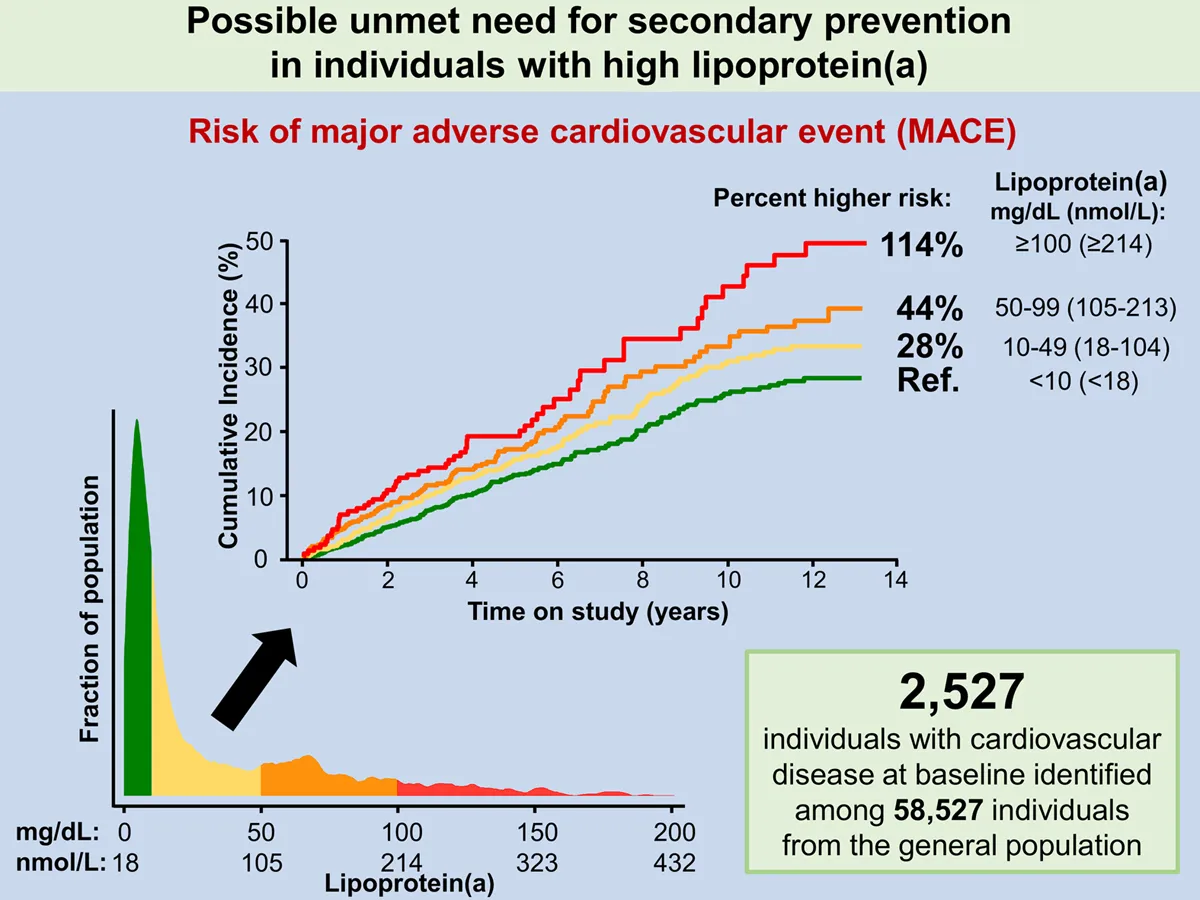
Lp(a) is the strongest inherited risk factor for heart disease. According to experts like Sam Tsimikas, Lp(a) is “more heritable than hypertension, diabetes, and obesity.”
The American Heart Association and American College of Cardiology now recommend that every adult get their Lp(a) tested. In the AHA/ACC’s March 2026 gidelines, this is a Class 1 recommendation, which is the strongest the AHA/ACC issues. This means the benefit of Lp(a) screening clearly outweighs any risk. The new 2026 gideliens are a major shift from the previous 2018 guidelines, which mentioned Lp(a) only as a “risk enhancer” without a specific testing recommendation.
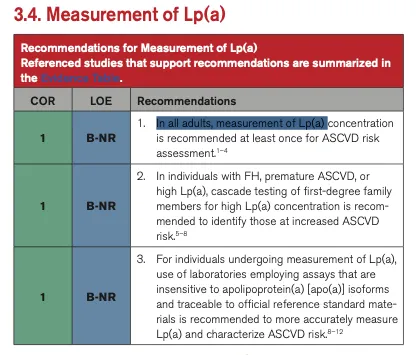 The 2026 guidelines now recommend universal testing of Lipoprotein(a). Source: 2026 ACC/AHA Dyslipidemia Guideline.
Today, less than 1% of people test their Lp(a). In this post, we’ll define what Lp(a) is, normal Lp(a) levels, what the 2026 AHA/ACC recommendations say, and how to get tested.
What is Lp(a)?
Lipoprotein(a) is a cholesterol particle with an extra protein wrapped around it. The extra protein camoflauges Lp(a) from your liver. Each Lp(a) particle is 6.6x more likely to cause heart disease than ordinary cholesterol.
About 20% of people have elevated Lp(a) levels (≥125 nmol/L or ≥50 mg/dL). At that threshold, heart disease risk increases by about 40%. At very high levels (≥250 nmol/L), risk doubles. Because Lp(a) is almost entirely genetic (80–90% heritable and stable by age 5), a single measurement tells you what you need to know.
| Lp(a) level | Relative ASCVD risk increase |
|---|---|
| <75 nmol/L (<30 mg/dL) | Reference (low) |
| 75–124 nmol/L (30–49 mg/dL) | 1.2× |
| ≥125 nmol/L (≥50 mg/dL) | 1.4× |
| ≥250 nmol/L (≥100 mg/dL) | 2× |
| ≥350 nmol/L (≥150 mg/dL) | 3× |
| ≥430 nmol/L (≥180 mg/dL) | 4× |
This data is from the UK Biobank Study, as cited in the 2026 AHA/ACC guideline.
Less than 1% of people get Lp(a) tested today
Testing of Lp(a) has increased by 20x in the last decade. Even still, only 0.24% of people are getting their Lp(a) tested. This data is from a UCSD analysis of 300 million patient records from 1,715 hospitals and 41,000 clinics from all 50 US states. According to study author Mattheus Ramsus, Professor of Cardiology at UCSF, “We’re seeing a growing recognition among clinicians of the importance of Lp(a) testing, but the low overall testing rates and regional imbalances highlight how much further we need to go.”
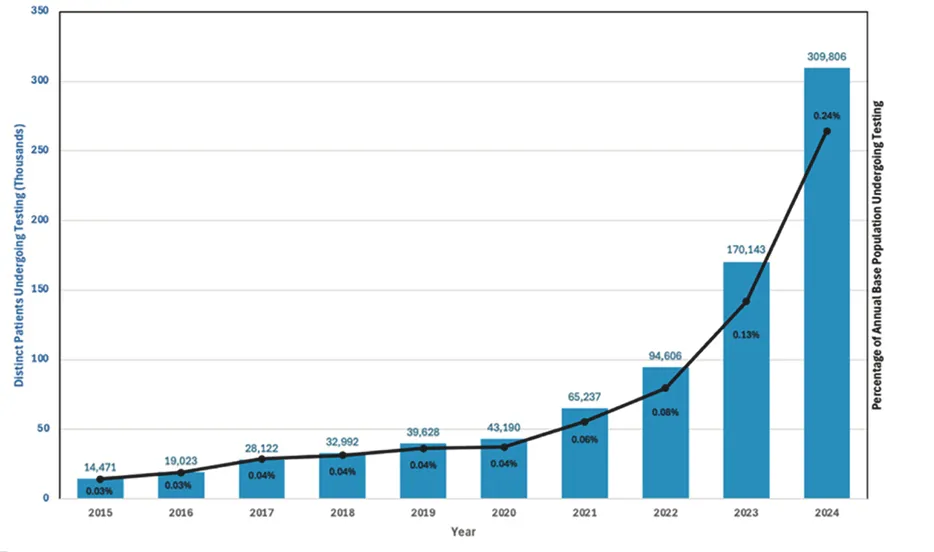 Lp(a) testing has increased 20x in the last decade. Source: Journal of the American College of Cardiology: Advances
The new AHA/ACC recommendation should change this. With universal screening now officially endorsed at the highest level, Lp(a) testing should become as routine as checking your cholesterol.
What to do if your Lp(a) is elevated
There are no FDA-approved drugs specifically for lowering Lp(a)—yet. However, several promising therapies are in clinical trials: lepodisiran (Eli Lilly) lowered Lp(a) by 93.9%, while Novartis’s Phase III Lp(a) HORIZON outcomes trial of pelacarsen has completed follow-up. No pelacarsen results have been announced as of August 31, 2026, so it remains unknown whether its large Lp(a) reductions prevent heart attacks and strokes. For a detailed breakdown of current and upcoming Lp(a)-lowering medications, see our Lp(a) treatment guide.
In the meantime, the guidelines recommend:
- Aggressive ApoB management. Since you can’t directly lower Lp(a) yet, reducing your overall atherogenic particle count through nutrition, exercise, and medication (statins, ezetimibe) is the best strategy.
- PCSK9 inhibitors. For patients with elevated Lp(a) and established heart disease, the guidelines specifically recommend PCSK9 monoclonal antibodies, which lower Lp(a) by 20–30% in addition to LDL.
- Cascade testing. If your Lp(a) is elevated, your parents, siblings, and children should be tested too.
The AHA/ACC now recommend universal Lp(a) screening
Until now, official guidelines only suggested testing Lp(a) in patients with a personal or family history of early cardiovascular disease. However, as research has revealed how common and impactful elevated Lp(a) is (and how heavily it’s determined by genetics) experts and professional societies concluded that selective testing misses the majority of people at risk. The AHA/ACC updated their 2026 guidelines to recommend universal, one-time Lp(a) screening for all adults. This ensures that those at highest risk are identified early regardless of family history or symptoms.
How to get your Lp(a) tested
If you haven’t had your Lp(a) measured, the AHA/ACC now recommends you should. Our Lipoprotein(a) page has the normal ranges in both units, what the test costs, and where to get a draw. Empirical’s comprehensive heart panel includes Lp(a), ApoB, hsCRP, and the other biomarkers emphasized in the new guidelines, available direct-to-consumer for $190.
Get your free 30-day heart health guide
Evidence-based steps to optimize your heart health.