Red yeast rice is often recommended as a natural alternative to statins, but its active ingredient (monacolin K) is chemically identical to lovastatin. That means the dosage and strength of red yeast rice to lower cholesterol is unregulated. Prescription statins have fixed, verified doses and rigorous testing for contaminants batch by batch; red yeast rice capsules are a bit of a wild west.
This post covers why monacolin K is the active ingredient in lovastatin, how the FDA ended up in a strange standoff over regulation of red yeast rice, empirical testing of how much the dose varies between brands of red yeast rice, contamination events, and scientifically-grounded ways to get your cholesterol lower.
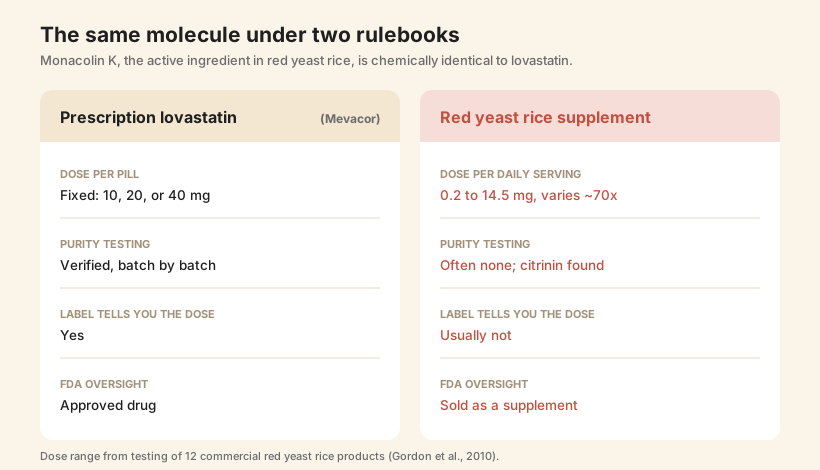 Red yeast rice and lovastatin have the same active ingredient, but the dose, purity, and oversight vary substantially.
Red yeast rice = Monacolin K = lovastatin
Lovastatin was first isolated from a fungus. Red yeast rice is just rice fermented with the mold Monascus purpureus, which produces Monacolin K. This same mold is used to give a distinct red hue and umami taste to foods like Peking duck, red fermented tofu, and rice wine.
Monacolin K and lovastatin the identical molecules: they have the same chemical formula (C₂₄H₃₆O₅), weight, and three-dimensional structure. That means they also block the same enzyme (HMG-CoA reductase), lower LDL through the same pathway, and have the same fide effects like muscle pain. Lovastatin got approved as a prescription drug in 1987 (several years before red yeast rice was sold as a supplement).
Why is red yeast rice sold as a supplement at all? The history of Cholestin.
Cholestin was a read yeast rice product that went on sale in the United States in 1996. In 1998, the FDA ruled that Cholestin was an unapproved drug, because it contained clinically-significant amounts of lovastatin. The FDA noted the manufacturer had engineered its process to maximize and standardize the lovastatin content (essentially, what you would do to manufacture a prescription medication).
That’s reasonable, but leaves manufacturers in a bit of a bind. If you standardize the dose, it’s an unapproved drug. If you don’t, it’s still a legal supplement. The result is that red yeast rice supplements are essentially just unregulated lovastatin.
Fortunately, lovastain is now cheap and generic. It costs about $6-$15 for a 30-day supply, which may actually be less than what you’d pay for a supplement.
Red yeast rice’s Lovastatin content varies by 70x
How much “statin” is in Lovastatin? Researchers tested 12 commercial red yeast rice supplments, and found 70x variation in Monocolin K concentration. Monacolin K ranged from 0.20 to 14.54 mg per recommended daily dose.
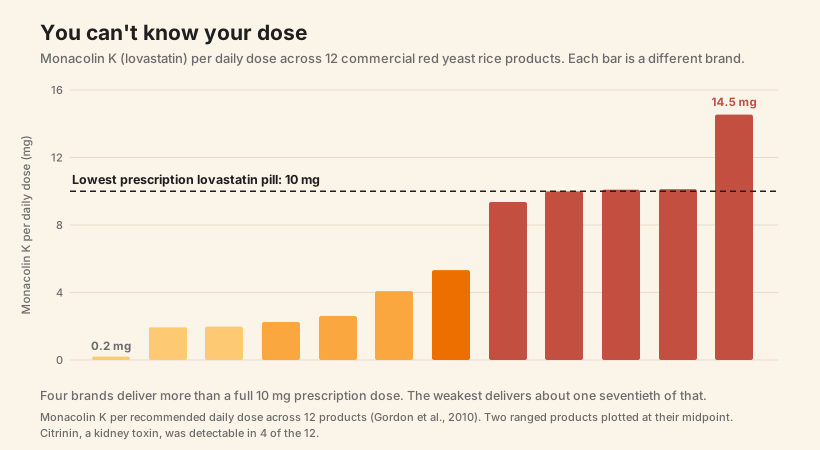 Red yeast rice varied by 70x in terms of statin concentration in testing. Source: 2010 analysis in JAMA Internal Medicine.
For context, prescription lovastatin comes in 10, 20, and 40 mg tablets. Four of these supplements landed at or above 10 mg, so a “take one capsule daily” instruction was handing out a real starting statin dose. The weakest red yeast rice supplement delivered 0.2 mg, basically nothing. Two people following the same label on two different brands can be seventy doses apart without knowing it.
Red yeast rice contamination
Two contaminants keep showing up in red yeast rice. The first is citrinin, a mold byproduct that’s toxic to the kidneys. In the same 12-product study, 4 of the products contained it. A later analysis of 37 products found only a single one met the European limit for citrinin. The second is worse. In 2024, red yeast rice supplements made by Kobayashi Pharmaceutical in Japan were tied to widespread kidney failure. The contaminant was puberulic acid, a compound the intended fermentation never should have produced. More than 500 people were hospitalized and dozens of deaths were investigated as possibly related (Kobayashi red yeast rice scandal). Many of the affected didn’t regain normal kidney function after stopping.
What to do if you want your cholesterol lower
If red yeast rice appeals to you, remember: ultimately, it’s lovastatin. You might as well take a dose that’s tightly regulated. If you don’t know your LDL, ApoB, Lp(a), start there first.
Get your free 30-day heart health guide
Evidence-based steps to optimize your heart health.