The standard advice for high blood pressure is “eat less salt.” That’s half right. Sodium does raise blood pressure, but potassium lowers it. For most people, the potassium half is the bigger missed opportunity. Sodium and potassium work as a pair in the kidneys, so the balance between them moves your blood pressure more than either number on its own.
The American Heart Association’s 2026 dietary guidance endorses a combined approach of reducing sodium and increasing potassium to control high blood pressure. This post lays out the thesis, the trials that established it, the foods with the best potassium-to-sodium ratio, and how to track the balance from everyday meals.
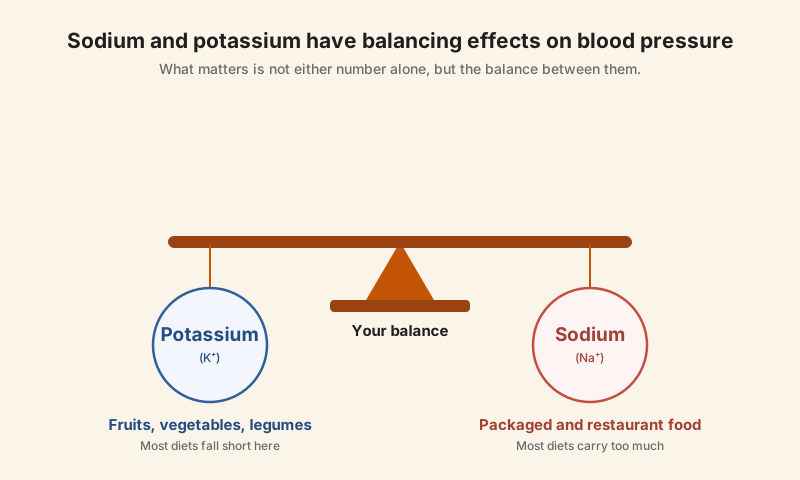 Sodium and potassium have opposite effects on blood pressure. The balance between them is the largest dietary lever for blood pressure.
Why sodium raises, and potassium lowers, blood pressure
Blood pressure is the force your blood exerts against artery walls. When the volume of blood increases,pressure goes up. Sodium pulls water into the blood, increasing volume and therefore blood pressure. Potassium helps the kidneys send sodium and water out in urine, decreasing volume and thus blood pressure. In other words, sodium inflates the system and potassium lets it down.
Most Americans eat the wrong ratio of sodium to potassium. Average intake runs around 3,400 mg of sodium and only about 2,600 mg of potassium per day. Your cardiovascular system would prefer the reverse: more potassium than sodium.
The DASH trials proved sodium and potassium move blood pressure
The clearest evidence comes from the DASH (Dietary Approaches to Stop Hypertension) trials. We cover these in depth in our post on data-driven nutrition, but here’s a quick overview. The original DASH trial fed people a diet rich in fruits, vegetables, and legumes (so, high in potassium) and cut systolic blood pressure by 11.4 mmHg in adults with hypertension, compared to a typical American diet. The follow-up DASH-Sodium trial then varied sodium on top of that and found an additional drop, with a graded effect: less sodium meant lower pressure at every step.
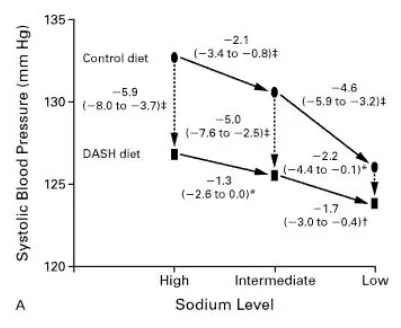 Lowering sodium and raising potassium each move systolic blood pressure, and the effects stack.
These are large effects. The effect of the DASH diet is comparable to what a first-line blood pressure medication delivers.
The potassium-to-sodium ratio matters more than either alone
Because the sodium and potassium have opposite effects on blood pressure, their ratio predicts heart outcomes better than either number by itself. A large study in BMJ Open found the potassium-to-sodium ratio was a stronger predictor of cardiovascular disease and death than sodium or potassium measured separately.
That is why the AHA guidance, cited above, puts it in terms of the pair rather than either mineral alone:
“Available evidence supports a combined approach of reducing sodium and increasing potassium intake for hypertension prevention and control.”
A useful target is a potassium-to-sodium ratio above 1.0, ideally closer to 1.5. Most Americans sit around 0.7, meaning they eat more sodium than potassium by weight. The good news is that you can move the ratio from either side, and adding potassium-rich foods is often easier than cutting sodium.
Foods with a high potassium-to-sodium ratio
The foods that fix the ratio are the ones with lots of potassium and almost no sodium: whole plants and fresh proteins. The table below sorts common foods by their potassium-to-sodium ratio, so the higher the number, the better it tilts the balance.
| Food | Serving | Potassium | Sodium | K : Na ratio |
|---|---|---|---|---|
| Spinach (cooked) | 1 cup | ~840 mg | ~125 mg | ~6.7 |
| White beans (cooked, unsalted) | ½ cup | ~500 mg | ~5 mg | ~100 |
| Avocado | 1 whole | ~975 mg | ~10 mg | ~98 |
| Sweet potato (baked) | 1 medium | ~540 mg | ~25 mg | ~22 |
| Banana | 1 medium | ~422 mg | ~1 mg | ~420 |
| Salmon (wild, cooked) | 3 oz | ~534 mg | ~75 mg | ~7 |
| Lentils (cooked, unsalted) | ½ cup | ~365 mg | ~2 mg | ~180 |
| Plain yogurt (low-fat) | 1 cup | ~573 mg | ~175 mg | ~3.3 |
For comparison, the foods that wreck the ratio run the other way: canned soup (800 to 1,200 mg sodium per serving), deli meats (500 to 700 mg per few slices), and most packaged snacks. These carry far more sodium than potassium, so a single serving can undo several good meals.
A practical rule: build meals around plants and fresh proteins, and treat packaged and restaurant food as the place where sodium sneaks in. For a longer list sorted by potassium content, see our guide to potassium-rich foods for blood pressure.
How to track sodium and potassium from food photos
Knowing the ratio matters only if you can see your own. Sodium and potassium are hard to track by hand, because neither is printed on whole foods and restaurant meals come with no label at all.
Modern AI-enabled apps like Empirical Health can estimate both minerals from a photo of your plate. Snap the meal, and the app identifies the foods and adds up potassium, sodium, and the ratio between them across your day.
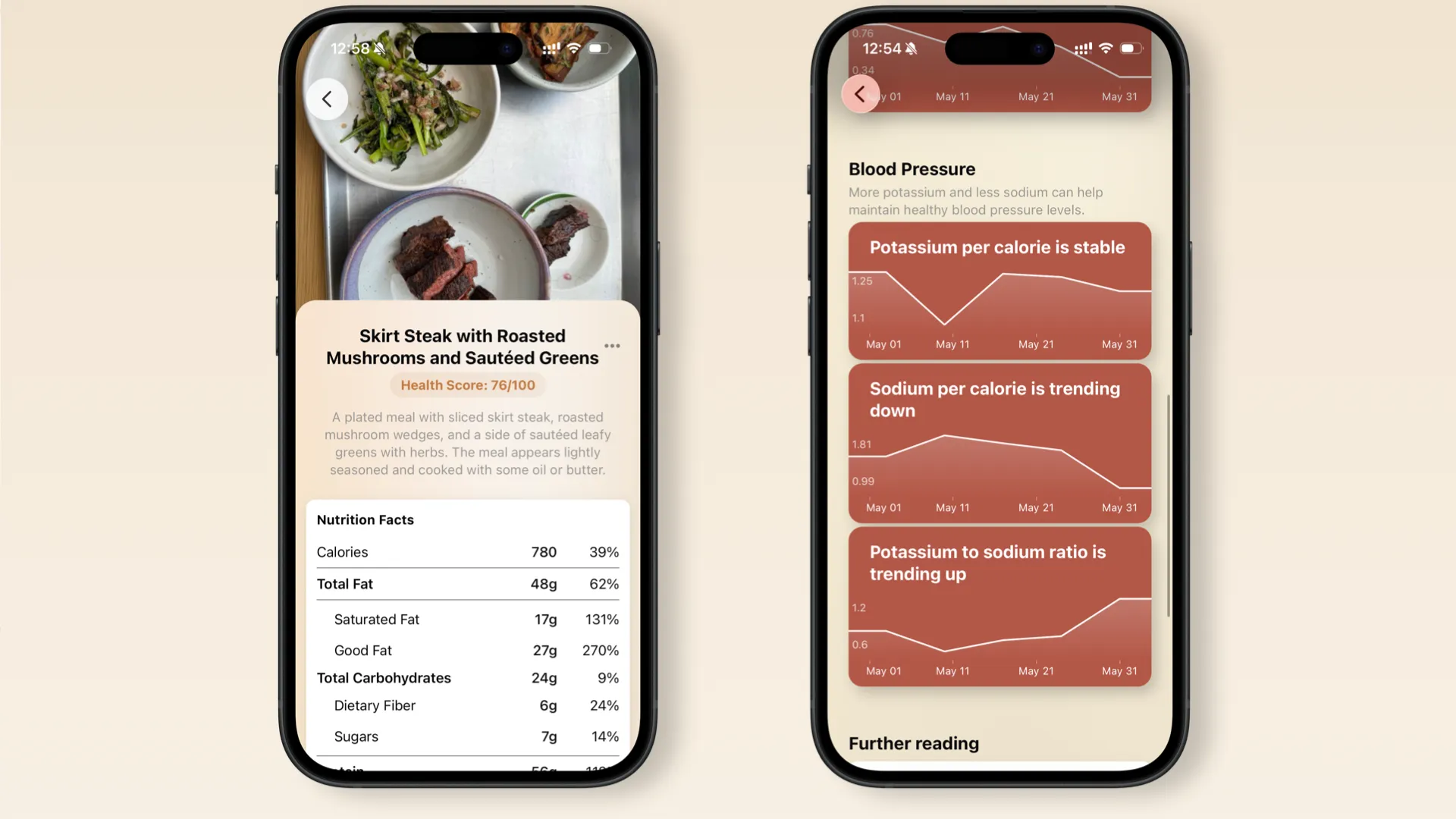 Empirical Health lets you estimate sodium and potassium from a food photo. It also lets you track
your sodium to potassium ratio over time.
Empirical Health lets you estimate sodium and potassium from a food photo. It also lets you track
your sodium to potassium ratio over time.
Seeing the ratio per meal changes behavior. A deli sandwich that reads 0.3 next to a salmon-and-spinach plate that reads 1.9 makes the trade-off concrete, and it points you toward the swaps that actually move blood pressure.
Summary: sodium, potassium, and blood pressure
Blood pressure is one of the most modifiable cardiovascular risk factors, and the sodium-potassium balance is one of the strongest dietary levers within it. Eating less salt helps. Eating more potassium often helps more. Watching the ratio between them, rather than either number alone, is what the trials and the guidelines both point to.
Want to see where your blood pressure stands alongside the rest of your cardiovascular picture? Empirical Health’s comprehensive health panel tracks blood pressure trends alongside 100+ biomarkers, including ApoB, Lp(a), hs-CRP, and HbA1c, so you know exactly where to focus. Learn more →
Get your free 30-day heart health guide
Evidence-based steps to optimize your heart health.