Cialis is best known as an erectile dysfunction drug, but it’s also being heavily promoted for longevity.
On the surface, I suppose this story is appealing: PDE5 inhibitors relax blood vessels, modestly lowers blood pressure, and may reduce some inflammatory markers. Large observational studies also lPDE5 inhibitors with fewer heart attacks and deaths.
But what if we compare Cialis to “boring”, conventional medicine? Say, standard blood pressure drugs, statins, the DASH diet, and so on. How does it stack up? Read on for what clinical studies say.
How Cialis compares with blood pressure medication and statins
Most cardiovascular studies combine several PDE5 inhibitors, so I’ll report results for the drug class rather than Cialis specifically. A 2025 meta-analysis of 63 randomized trials found that PDE5 inhibitorsclass lowered blood pressure by 2.8/1.8 mmHg. One standard-dose blood pressure drug lowered it by 9.1/5.5 mmHg (354-trial meta-analysis). The DASH diet lowered systolic pressure by 11.4 mmHg among people with hypertension, which is even more dramatic
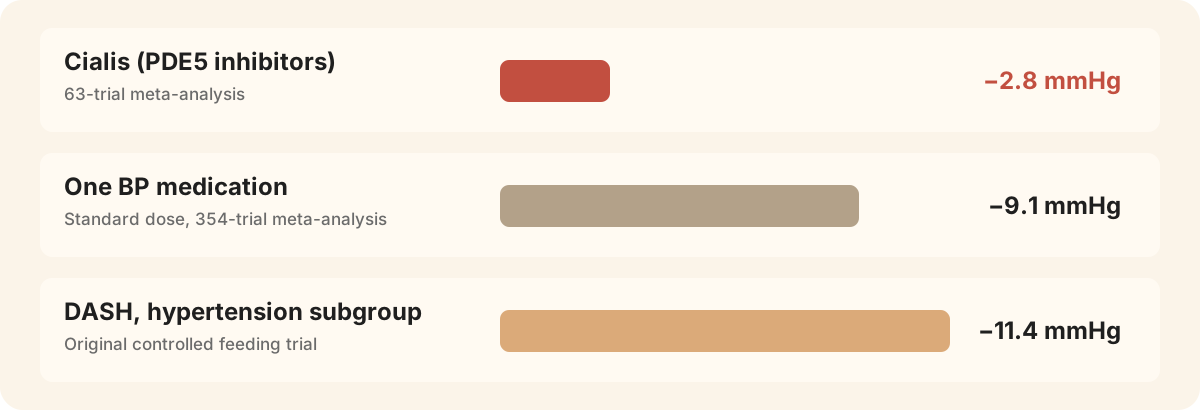 Cialis vs boring drugs and conventional dietary advice Sources: PDE5 inhibitors, DASH, and blood pressure medication._
(Note that PDE5 inhibitors must not be combined with nitrates such as nitroglycerin, because blood pressure can fall dangerously low.)
The inflammation evidence is weaker. A 2025 meta-analysis found that long-term PDE5 inhibitor treatment reduced IL-6 by 0.64 standard deviations, but short-term treatment didn’t significantly reduce IL-6, CRP, or TNF-alpha. Six weeks of high-dose tadalafil also failed to lower those markers in the randomized MAKROTAD trial.
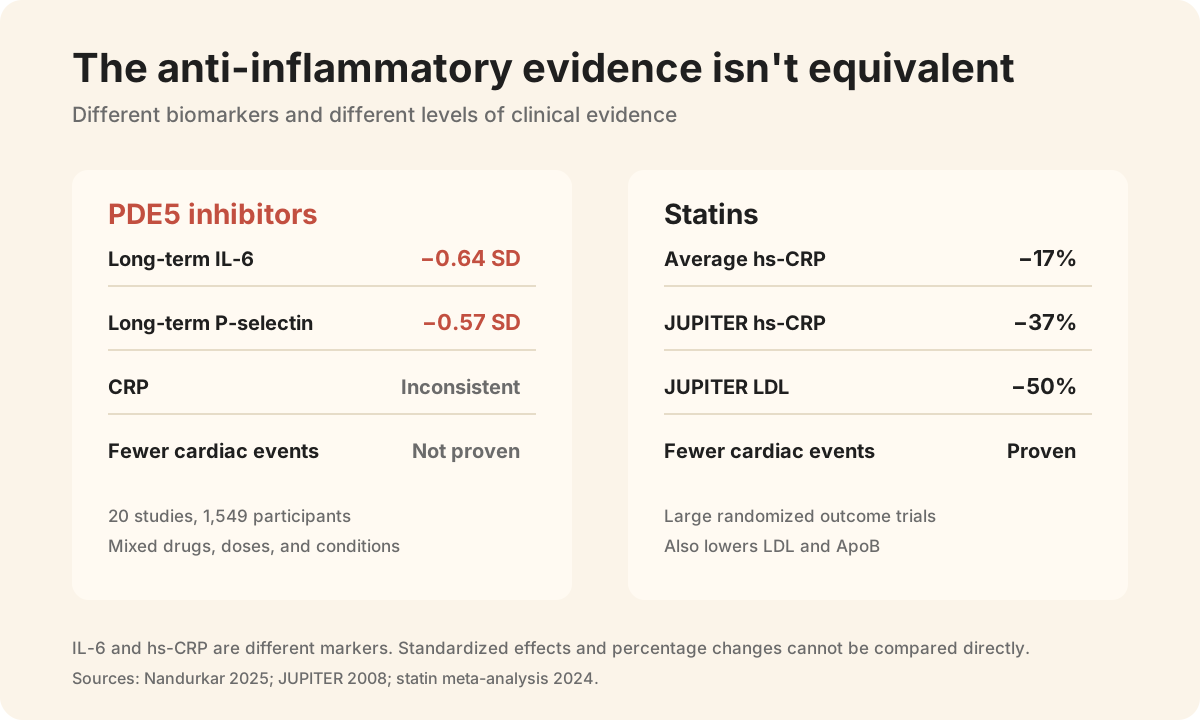 Research uses both hs-CRP and IL-6, so we’re not showing a direct quantitative comparison. Sources: PDE5 inhibitor meta-analysis, statin meta-analysis, and JUPITER.
Statins have very strong evidence from large randomized outcome trials. In JUPITER, rosuvastatin lowered hs-CRP by 37%, LDL by 50%, and major cardiovascular events by 44%. As yet, trial has shown that a tadalafil-driven change in inflammation prevents heart attacks.
Are Cialis and Viagra linked to fewer heart attacks?
A 2024 meta-analysis of 16 studies and 1.26 million participants linked PDE5 inhibitors with 22% fewer major cardiovascular events and 30% fewer deaths.
But almost all the data were observational. Men healthy enough for sexual activity may already have lower risk, and people who seek ED treatment may be healthier. These results justify a randomized trial, but they don’t prove that Cialis prevents heart attacks. Trials in other heart conditions have been decidely more mixed: a meta-analysis of heart failure trials found no overall improvement in prognosis or quality of life.
Should you take Cialis for longevity?
Honestly, right now, conventional medicine wins. Blood pressure medication has a larger effect, and statins prevent heart attacks and strokes in randomized trials. Cialis has a small blood pressure effect, inconsistent inflammation results, and promising but mostly observational cardiovascular data.
Cialis may provide cardiovascular benefits for someone who already has a reason to take it. And the evidence base may improve over time.
But as with many things in medicine, just optimize the boring stuff first.
Get your free 30-day heart health guide
Evidence-based steps to optimize your heart health.