While the idea that eating cholesterol raises cholesterol in your blood is intuitive, it’s also wrong. Even in 2026, many patients (and even some doctors) are making decisions based on outdated advice.
The evidence shows that dietary cholesterol only slightly raises blood cholesterol. Most of the cholesterol in your blood is made by your liver, not eaten. Not only that, when you take in more cholesterol from food, your liver compensates by making less, so there is a natural branch.
Medical societies are starting to incorporate this into their official guidance. For example, the 2026 American Heart Association dietary guidelines state that “dietary cholesterol is no longer a primary target for CVD risk reduction for most people” and stopped recommending an upper bound on eggs.
How much does dietary cholesterol change LDL?
Dietary cholesterol has a weak effect on LDL cholesterol (the “bad cholesterol” in your blood). A meta-regression of controlled feeding studies pooled many trials that fed people known amounts of cholesterol and measured the change in their blood lipids. Adding dietary cholesterol does raise LDL, but the effect is modest, and it raises HDL (“good cholesterol”) at the same time.
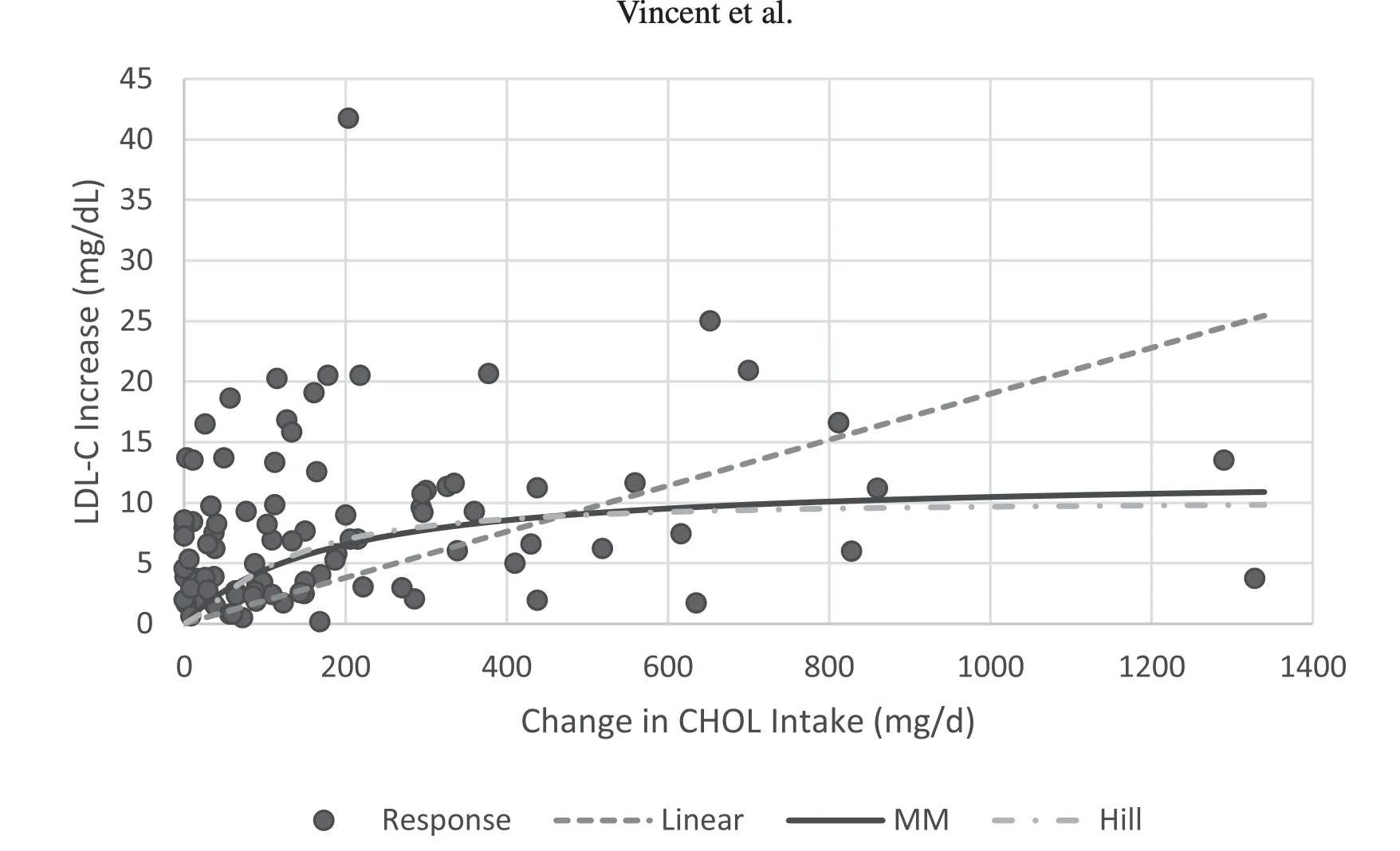 Across controlled feeding studies, more dietary cholesterol nudges LDL up, and HDL up alongside it. The effect is small relative to saturated fat. Source: Vincent et al., Am J Clin Nutr 2019.
For context, a large egg has about 186 mg of cholesterol. Under the old “less than 300 mg per day” rules, that single number put eggs on the avoid list. The feeding-study evidence says the resulting change in your blood LDL is small for most people.
However, some people are more sensitive to dietary cholesterol
A minority of people are cholesterol “hyper-responders” whose LDL rises more than average when they eat cholesterol. A 2026 Nature study suggests why: long-term dietary cholesterol activates a protein called Ral, which helps an enzyme called cathepsin A break down the liver’s LDL receptors. With fewer receptors, the liver clears less LDL from the blood. Differences in this pathway could explain why the same egg raises one person’s LDL more than another’s, though the research is too early to guide treatment. There are no symptoms of hyper-response, so the practical way to find out is to test your cholesterol, change your intake, and test again.
How diet actually moves your LDL
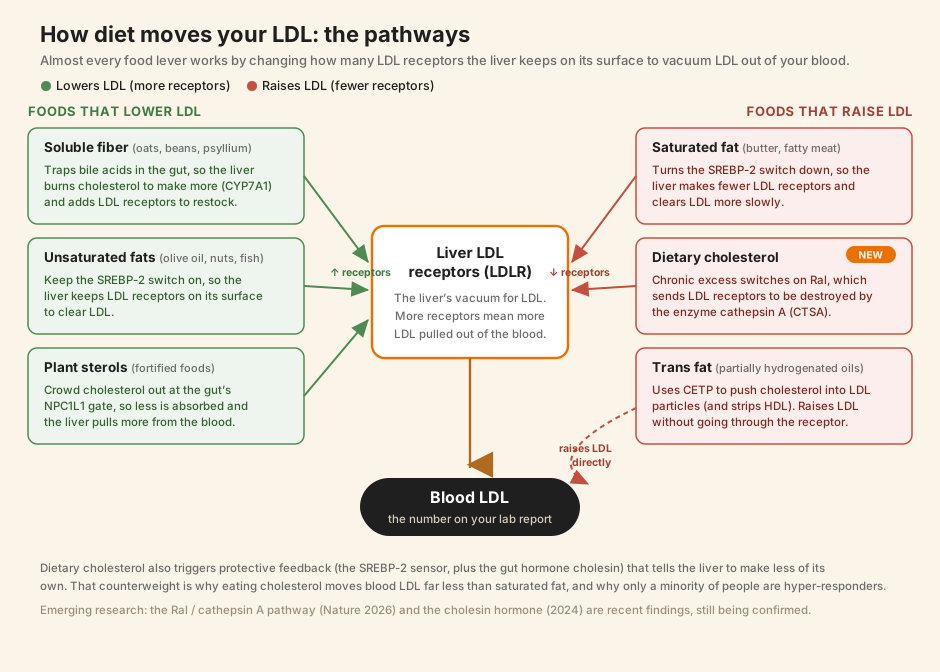 Most diet levers raise or lower LDL by changing how many LDL receptors the liver keeps on its surface. Soluble fiber and unsaturated fats build receptors; saturated fat and long-term dietary cholesterol remove them. Trans fat is the exception that raises LDL without touching the receptor.
Most foods change LDL by altering the number of LDL receptors on the liver, which pull LDL from the blood. Soluble fiber traps bile acids in the gut, forcing the liver to use cholesterol to replace them and add more receptors. Unsaturated fats also promote receptors, while saturated fat suppresses them. Absorbed dietary cholesterol both reduces the liver’s own cholesterol production and activates the Ral pathway that removes receptors. Trans fat is the exception: it uses a protein called CETP to move cholesterol into LDL particles without changing the receptors.
Fiber and saturated fat actually drives your blood cholesterol
If you want to improve your blood cholesterol, the most important nutrients to track are fiber and saturated fat. Saturated fat raises LDL by slowing how fast your liver clears it. Fiber lowers LDL by pulling cholesterol out of circulation. We cover both in more detail your your cholesterol is driven by saturated fat and fiber.
If you are mostly here for the egg question, see eggs are now officially healthy.
Get your free 30-day heart health guide
Evidence-based steps to optimize your heart health.