Fatigue and low energy may seem like vague symptoms, but one underlying physical cause is low ferritin. New guidelines from the American Society of Hematology just changed the thresholds for determining iron deficiency based on ferritin, iron, transferrin, red cells, and other biomarkers.
Under these new guidelines, 34% of women under the age of 50 have iron deficiency. (For men, it’s 3%.)
Let me explain what changed, why. We’ll start off with a more basic question: what is ferritin and how does it relate to iron and red blood cells?
Ferritin is an “iron savings account”
Ferritin is a protein that stores iron inside your cells. Think of it as an iron savings account: your body can draw on those reserves when it needs iron. A ferritin blood test helps estimate how much you have saved.
Iron travels through the blood attached to another protein, transferrin. Your bone marrow uses iron to make hemoglobin (the protein inside red blood cells that binds oxygen). Those cells then carry oxygen from your lungs to the rest of your body.
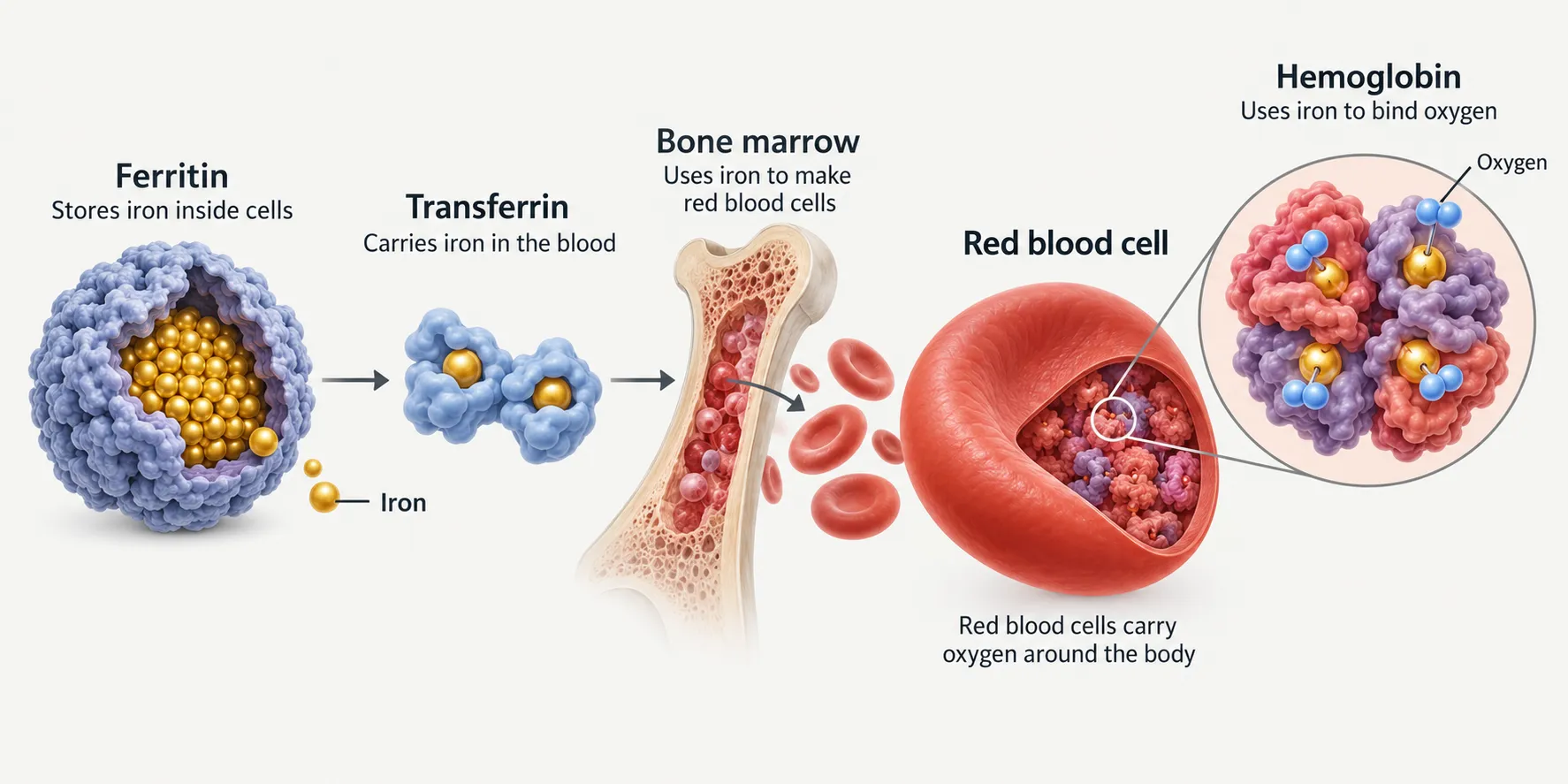
How iron moves from storage into use
The new guidelines set ferritin thresholds of 30, 50, or 100 ng/mL
The ASH’s 2026 guidelines set different ferritin thresholds for different groups:
| Ferritin threshold | When it applies |
|---|---|
| ≤30 ng/mL | General threshold for adults, including menstruating and pregnant individuals |
| ≤50 ng/mL | Appropriate for adults with symptoms or ongoing risks, and for menstruating individuals with heavy or other excessive uterine bleeding, additional risks, upcoming surgery, or plans for pregnancy. May be appropriate during pregnancy with anemia. |
| <100 ng/mL or TSAT <20% | In adults with inflammation, measure both ferritin and transferrin saturation (TSAT); deficiency may be considered if either criterion is met |
Source: ASH’s official visual summary of recommendations, which also covers children and adolescents.
One edge case is that inflammation can raise ferritin even when iron is insufficient. A biomarker called TSAT measures how much of the blood’s iron-carrying capacity is occupied, helping assess iron availability when ferritin is harder to interpret. The 100 ng/mL threshold belongs to that setting; it isn’t a target everyone should supplement toward.
About 34% of U.S. women ages 19–49 would have iron deficiency under 2026 ASH guidelines
A study of 8,021 U.S. adults simulated changing the ferritin cutoffs from <15 (old guidelines) and <30 ng/mL (new guidelines). Among women over 18-49, the estimated prevalence of iron deficiency rose from 14% to 34%. Among men age 18-49, it rose from 1% to 3%.
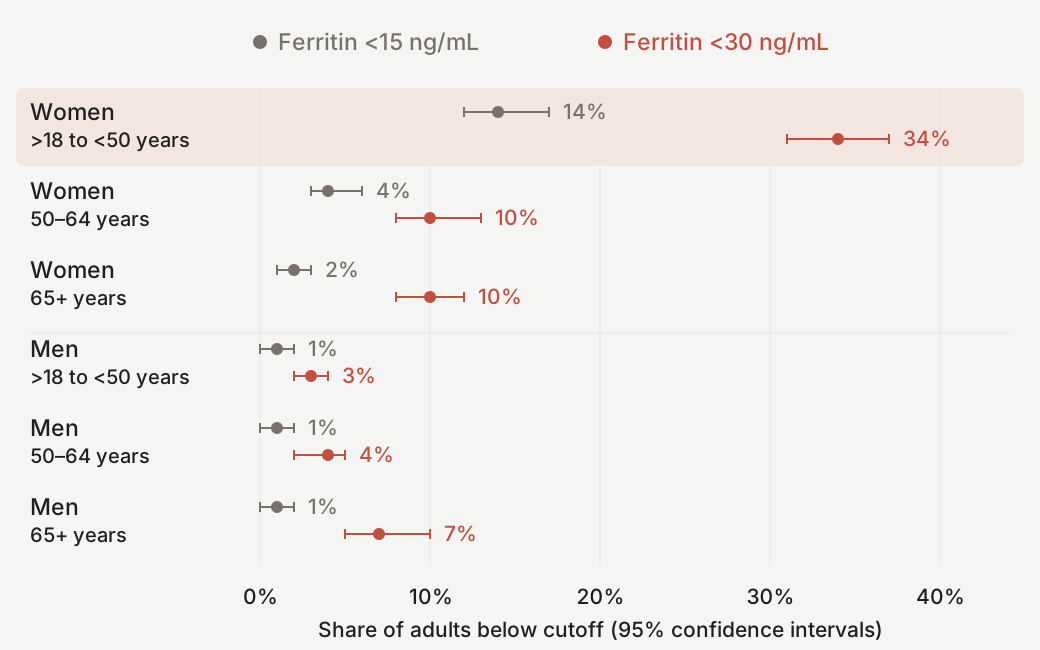
Higher ferritn cutoffs change the rate of iron deficiency Source: Tawfik et al., JAMA Network Open, 2024.
How did ASH actually decide to change the threshold?
Iron treatment can improve fatigue before anemia develops. In a randomized trial of 198 menstruating women with fatigue, ferritin below 50 ng/mL, and no anemia, fatigue scores fell by 47.7% with oral iron versus 28.8% with placebo over 12 weeks.
The PREFER trial tested intravenous iron in women with iron deficiency, fatigue, and normal or borderline hemoglobin. Among 290 women analyzed, 65.3% receiving iron improved by at least one point on the Piper Fatigue Scale after eight weeks, compared with 52.7% receiving placebo.
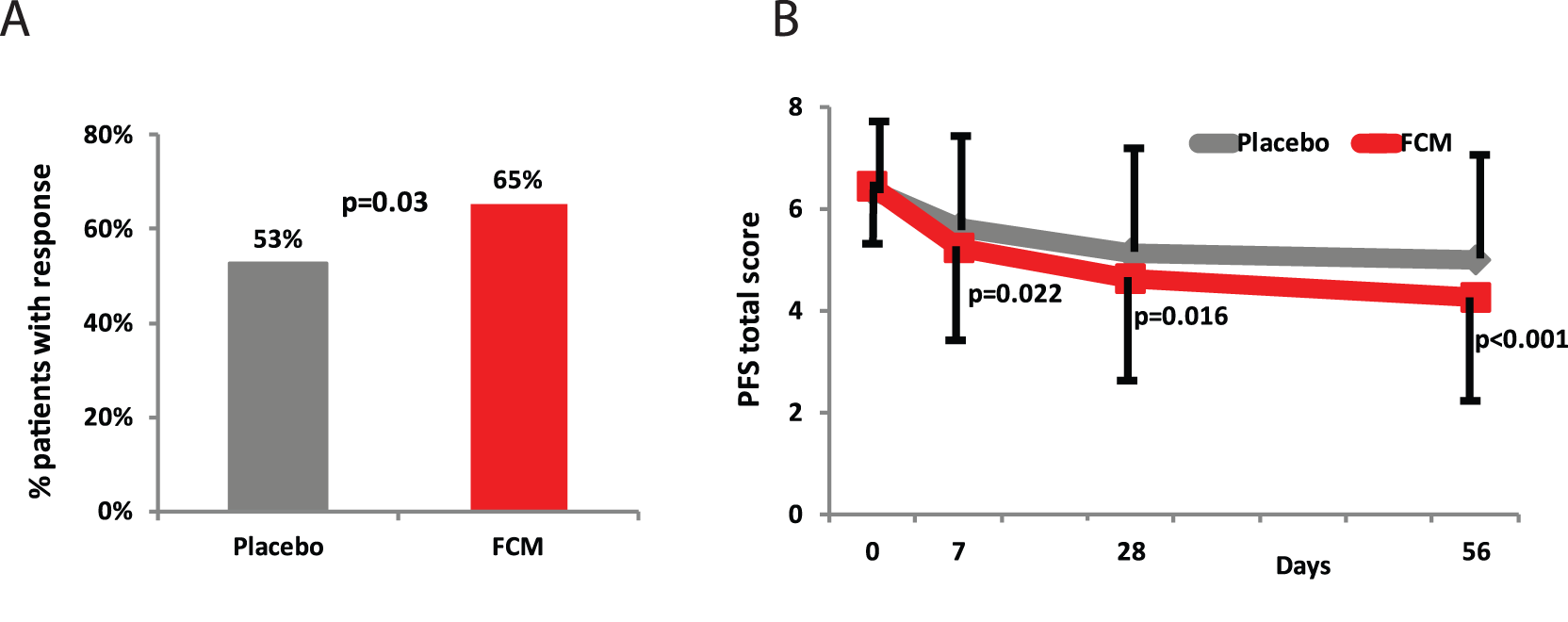
Fatigue improved more with intravenous iron (FCM, ferric carboxymaltose) than placebo; lower scores mean less fatigue, and error bars show standard deviations. Source: Favrat et al., PLOS ONE, 2014. Image credits.
PREFER was manufacturer-funded and single-blinded. These trials support treating symptomatic iron deficiency, but don’t establish the best diagnostic cutoff or show that everyone with low ferritin benefits.
ASH reviewed evidence through July 2025 using GRADE, a framework for assessing evidence certainty and weighing recommendations. Its recommendations favoring 30 ng/mL are conditional, with higher thresholds appropriate in specified circumstances. Powers et al., Blood Advances, 2026
Conclusion
If an old ferritin result was between 15 and 30, and you have fatigue, review it with your clinician. Confirming deficiency also means finding the cause and deciding how to replace iron and monitor recovery. ASH patient guide
Get your free 30-day heart health guide
Evidence-based steps to optimize your heart health.