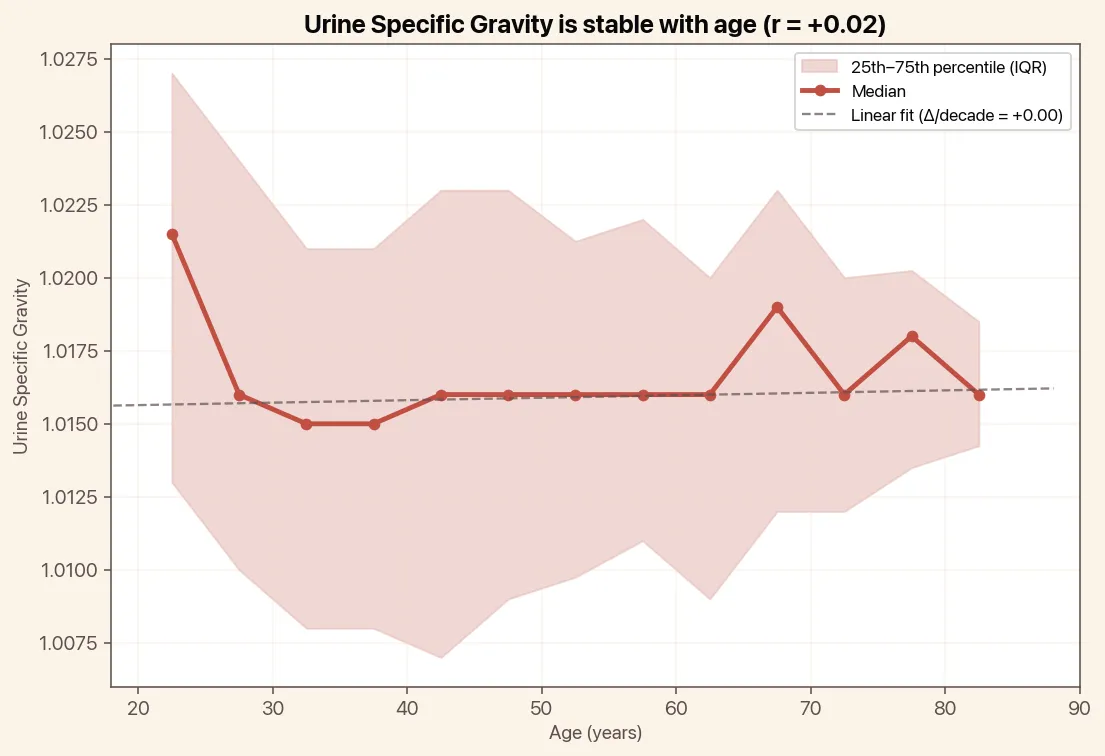
Normal range: 1.005 – 1.03 (higher is better)
Urine specific gravity measures how concentrated your urine is compared to pure water. It is a quick check of how well your kidneys can concentrate and dilute urine. Values close to 1.000 mean very dilute urine. Values above 1.030 suggest concentrated urine, usually from dehydration. It is one of the simplest indicators of hydration status on a standard lab panel.
A normal Urine SG is 1.005 – 1.03. Higher is better.
Low specific gravity (dilute urine) results from drinking a lot of water before the test, diabetes insipidus, or kidney tubular damage that impairs concentrating ability. Diuretic medications also dilute the urine.
High specific gravity (concentrated urine) is most often from dehydration, heavy sweating, or fluid restriction. Uncontrolled diabetes can raise the reading because glucose spills into the urine. Proteinuria (protein in urine) and contrast dye from recent imaging can also raise it.
The single most impactful lifestyle factor is hydration. Drinking adequate water throughout the day keeps specific gravity in a healthy range. If your urine is consistently very concentrated, it may mean you need to drink more fluids. There are no specific medications that target specific gravity itself, but diuretics lower it, and dehydrating illnesses raise it.
Urine SG is most highly correlated with AST and Iron. Here are the top biomarkers correlated with Urine SG, based on 500,000 tests done by Empirical Health.
The percentage shows how strongly two biomarkers move together. A higher number means the relationship is stronger. Green = rises and falls together. Orange = one rises as the other falls.
You can test your Urine SG for $190 as part of Empirical's comprehensive health panel, which includes 100 biomarkers.
You can measure your Urine SG for at 2,200+ testing locations across the US. Click below and enter your zip code to browse locations near you.
Test your Urine Specific Gravity and 100+ other biomarkers in a single blood draw.