Normal range: 70 – 99 mg/dL (lower is better)
Blood glucose is your body's primary fuel. A fasting glucose test measures how well your body manages blood sugar after not eating for 8-12 hours. Fasting levels of 70-99 mg/dL are normal. 100-125 mg/dL signals prediabetes, meaning your body is starting to struggle with blood sugar regulation. 126 mg/dL or above on two separate tests indicates diabetes. Chronically high glucose damages blood vessels and nerves throughout the body, which is why early detection matters.
A normal Glucose is 70 – 99 mg/dL. Lower is better.
Insulin resistance is the most common cause of elevated fasting glucose. The pancreas produces insulin but cells don't respond to it efficiently, so blood sugar stays high. Obesity (especially visceral belly fat) is the primary driver of insulin resistance.
Other causes include type 2 diabetes, chronic stress (cortisol raises blood sugar), certain medications (corticosteroids, some diuretics, beta-blockers, and atypical antipsychotics), Cushing's syndrome, and pancreatitis. Not fasting for 8-12 hours before the blood draw can also produce a falsely elevated reading.
Lifestyle changes are remarkably effective for blood sugar. Regular exercise (both cardio and resistance training) improves insulin sensitivity. Losing 5-7% of body weight can reduce the risk of progressing from prediabetes to diabetes by over 50%. Reducing refined carbohydrates and sugar, eating more fiber, getting adequate sleep, and managing stress all help. Metformin is the most commonly prescribed medication for elevated blood sugar and is often used alongside lifestyle changes.
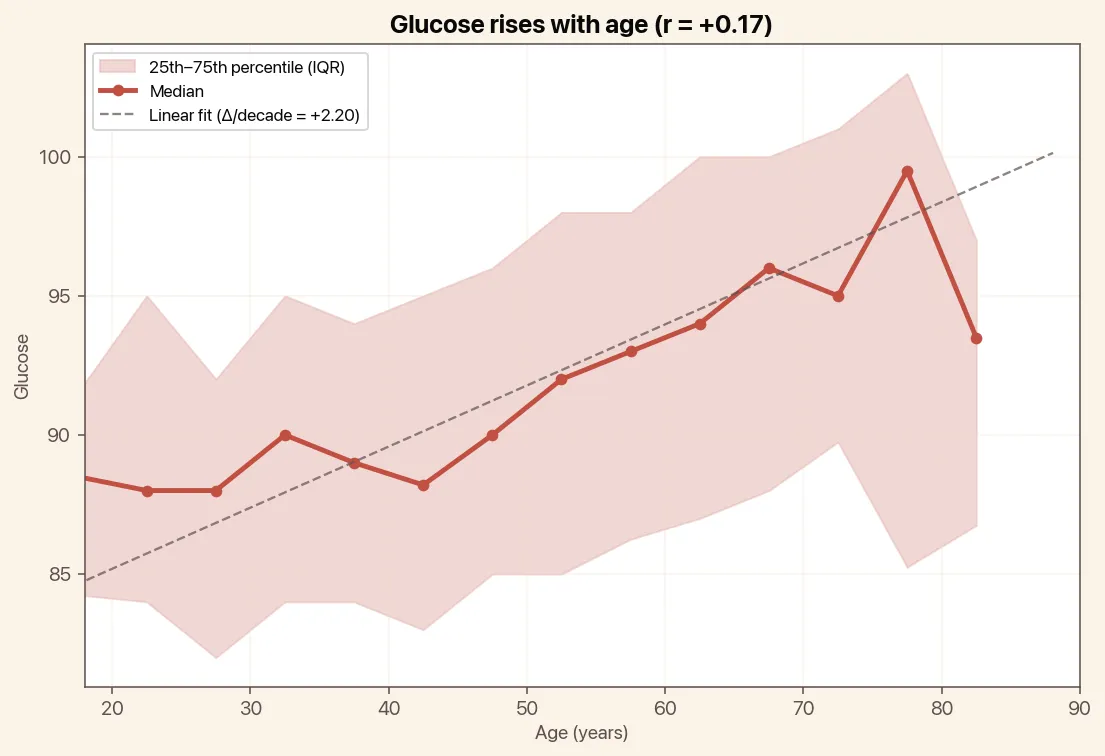
Glucose is most highly correlated with Creatinine and Albumin. Here are the top biomarkers correlated with Glucose, based on 500,000 tests done by Empirical Health.
The percentage shows how strongly two biomarkers move together. A higher number means the relationship is stronger. Green = rises and falls together. Orange = one rises as the other falls.
You can test your Glucose for $190 as part of Empirical's comprehensive health panel, which includes 100 biomarkers.
You can measure your Glucose for at 2,200+ testing locations across the US. Click below and enter your zip code to browse locations near you.
Test your Glucose and 100+ other biomarkers in a single blood draw.