Normal range: 3.4 – 5.4 g/dL (higher is better)
An albumin blood test measures the most abundant protein in your blood. Your liver makes albumin to carry hormones, vitamins, and medications through your bloodstream. It also keeps fluid from leaking out of blood vessels into surrounding tissues. Because albumin depends on a healthy liver and adequate nutrition, it is one of the best single markers of overall health. Low albumin is linked to worse outcomes in nearly every chronic disease.
Albumin isn't sold on its own. It comes in a comprehensive metabolic panel, about $40. A fuller workup adds Vitamin D ($75), hs-CRP ($69), ApoB ($50), and ApoA1 ($50). You can test Albumin and 100 other biomarkers for $190 as part of an Empirical membership.
Empirical is FSA/HSA eligible, so you can pay with pre-tax dollars. Fast for 8-12 hours beforehand for the most accurate lipid and metabolic results, and expect results in days rather than weeks.
Albumin is a protein made by the liver. Low levels can indicate liver or kidney problems.
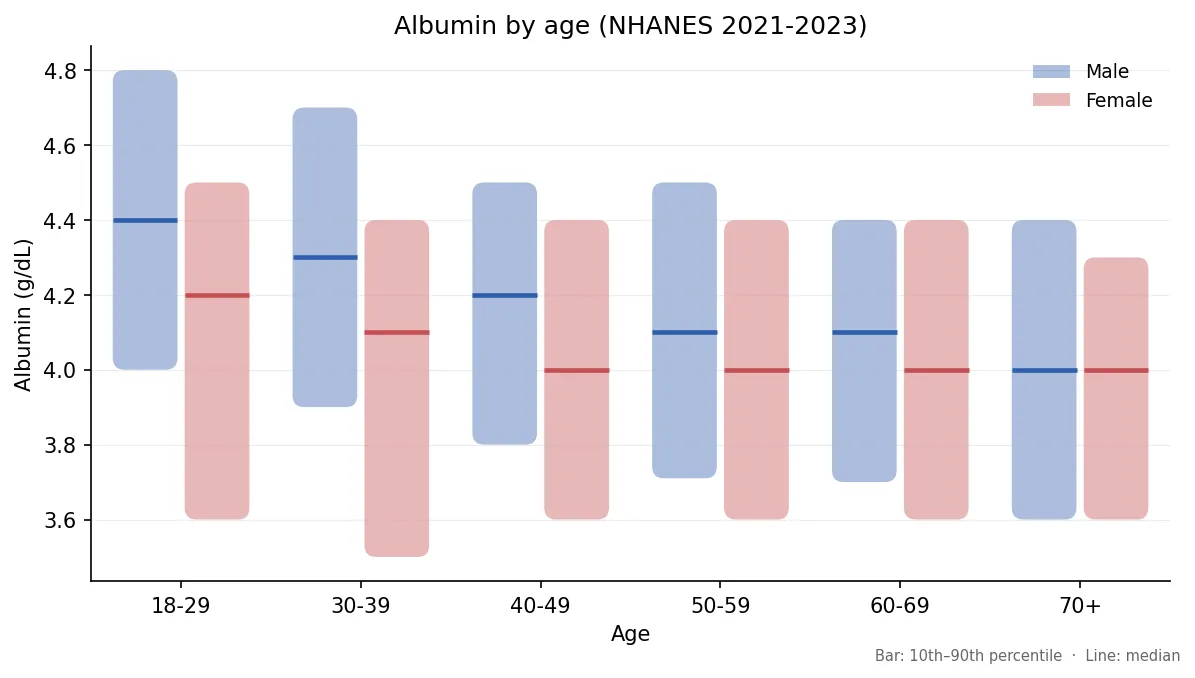
In NHANES 2021-2023, the median albumin was about 4.3 g/dL for adults aged 18-29 and 4.0 g/dL for adults aged 70 and older. The chart below shows the full distribution by age and sex.
Median albumin by age and sex, with the 10th to 90th percentile band. Source: NHANES 2021-2023 (weighted estimates).
A normal Albumin is 3.4 – 5.4 g/dL. Higher is better.
Low albumin is most often caused by chronic liver disease (cirrhosis), which impairs the liver's ability to produce it. Nephrotic syndrome (a kidney condition) causes albumin to leak into urine. Chronic inflammation from conditions like rheumatoid arthritis or Crohn's disease diverts the liver's resources away from albumin production. Severe malnutrition and prolonged hospitalization also lower levels.
Lifestyle factors matter too. A diet consistently low in protein can reduce albumin over time. Chronic heavy alcohol use damages the liver and is a common driver. Staying well-nourished with adequate protein, managing inflammation, and avoiding excess alcohol are the most effective ways to maintain healthy albumin.
Medications rarely cause low albumin directly, but some (like corticosteroids and certain chemotherapy drugs) can contribute indirectly by promoting protein breakdown or fluid shifts. High albumin is uncommon and almost always caused by dehydration rather than overproduction.
Albumin is most highly correlated with Total Protein and Total Bilirubin. Here are the top biomarkers correlated with Albumin, based on 500,000 tests done by Empirical Health.
The percentage shows how strongly two biomarkers move together. A higher number means the relationship is stronger. Green = rises and falls together. Orange = one rises as the other falls.
Albumin is drawn at 2,200+ Quest and BioReference patient service centers across the US, so there's usually one within a short drive. Browse the full directory to find the one closest to you.
Test your Albumin and 100+ other biomarkers in a single blood draw.