Test your Hemoglobin and 100+ other biomarkers for $190

Hemoglobin

Normal range: 13.5 – 17.5 g/dL (higher is better)

Hemoglobin is the iron-containing protein inside red blood cells that grabs oxygen in the lungs and delivers it throughout the body. It is the most commonly used marker to diagnose anemia. Low hemoglobin causes fatigue, weakness, pale skin, and shortness of breath. High hemoglobin may indicate dehydration, smoking, or a bone marrow condition called polycythemia.

Test your Hemoglobin

How much does a Hemoglobin test cost?

Hemoglobin isn't sold on its own. It comes in a complete blood count (CBC), about $35. A fuller workup adds Ferritin ($45), Vitamin D ($75), hs-CRP ($69), and ApoB ($50). You can test Hemoglobin and 100 other biomarkers for $190 as part of an Empirical membership.

Empirical is FSA/HSA eligible, so you can pay with pre-tax dollars. Fast for 8-12 hours beforehand for the most accurate lipid and metabolic results, and expect results in days rather than weeks.

Get tested for $190

Hemoglobin is a protein in red blood cells that carries oxygen throughout the body.

How does Hemoglobin change with age?

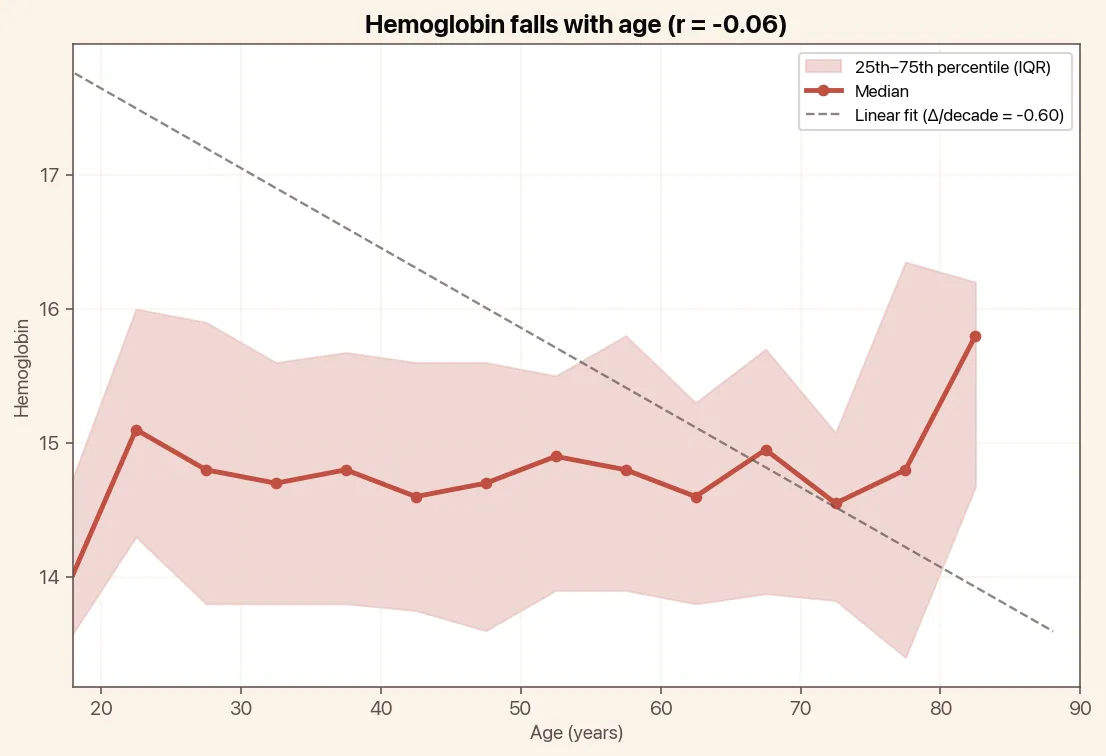
Hemoglobin tends to fall with age (correlation with age, r = -0.06). The chart below shows the median by 5-year age bin and a linear trend line.

Hemoglobin falls with age, chart with median and linear trend

What can cause low Hemoglobin?

A normal Hemoglobin is 13.5 – 17.5 g/dL. Higher is better.

Low hemoglobin follows the same causes as low RBC count. Iron deficiency is the most common culprit, followed by B12 or folate deficiency, chronic disease, and blood loss. Heavy menstrual periods are a leading cause in premenopausal women.

Chronic kidney disease reduces erythropoietin (the hormone that stimulates red cell production), lowering hemoglobin over time. High hemoglobin is usually from dehydration, smoking, or chronic lung disease. Testosterone therapy and anabolic steroids can also raise hemoglobin.

Eating iron-rich foods (red meat, beans, fortified cereals) and ensuring adequate B12 and folate intake are the most important dietary steps. If you are a runner or endurance athlete, be aware that intense training can lower hemoglobin through a process called "sports anemia" (dilution from increased blood volume), which is usually harmless. Quitting smoking is the most effective way to lower an elevated hemoglobin.

Biomarkers related to Hemoglobin

Hemoglobin is most highly correlated with Mean Corpuscular Hemoglobin Concentration and Creatinine. Here are the top biomarkers correlated with Hemoglobin, based on 500,000 tests done by Empirical Health.

The percentage shows how strongly two biomarkers move together. A higher number means the relationship is stronger. Green = rises and falls together. Orange = one rises as the other falls.

Frequently asked questions about Hemoglobin

Where to get a Hemoglobin test near you

Hemoglobin is drawn at 2,200+ Quest and BioReference patient service centers across the US, so there's usually one within a short drive. Browse the full directory to find the one closest to you.

Browse all testing locations

Know your Hemoglobin. Know your health.

Test your Hemoglobin and 100+ other biomarkers in a single blood draw.

Image of a man on cellphone
Start testing