Normal range: 8.5 – 10.5 mg/dL (higher is better)
A calcium blood test measures the most abundant mineral in your body. Most of your calcium lives in bones and teeth, but the small amount circulating in blood is critical for muscle contraction, nerve signaling, heart rhythm, and blood clotting. Your body tightly regulates blood calcium through parathyroid hormone and vitamin D, so abnormal levels usually point to a problem with one of those systems rather than diet alone.
Calcium isn't sold on its own. It comes in a comprehensive metabolic panel, about $40. A fuller workup adds Vitamin D ($75), hs-CRP ($69), ApoB ($50), and ApoA1 ($50). You can test Calcium and 100 other biomarkers for $190 as part of an Empirical membership.
Empirical is FSA/HSA eligible, so you can pay with pre-tax dollars. Fast for 8-12 hours beforehand for the most accurate lipid and metabolic results, and expect results in days rather than weeks.
Calcium is vital for bone health, muscle contraction, nerve function, and blood clotting.
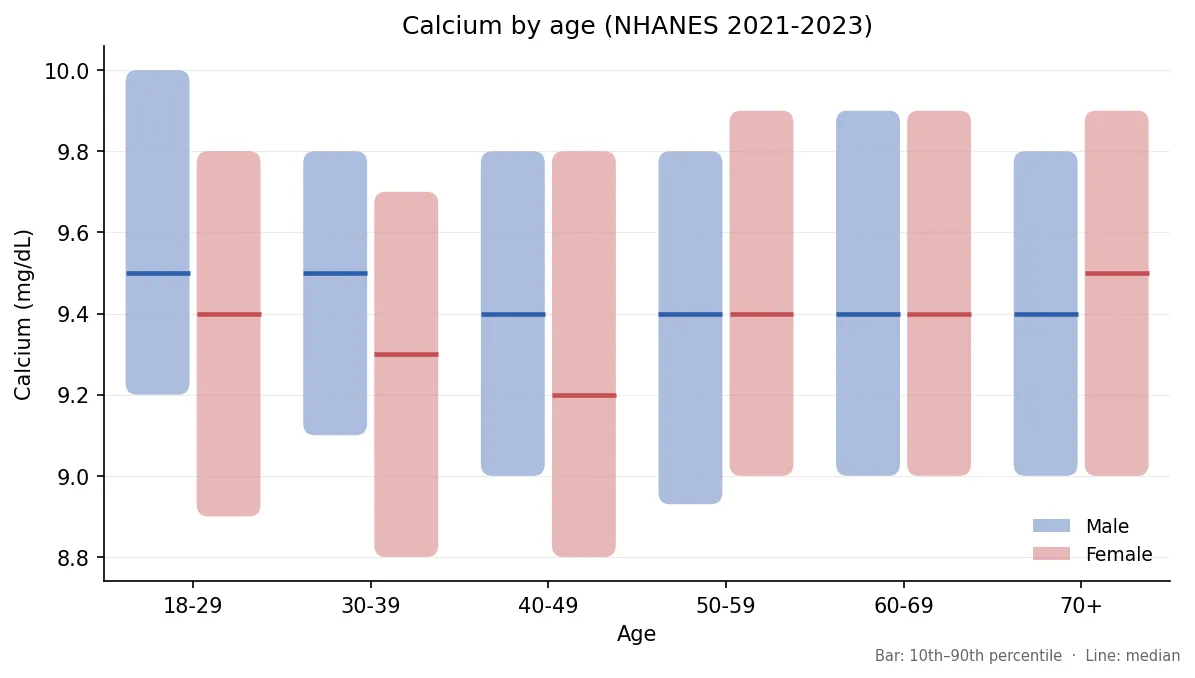
In NHANES 2021-2023, the median calcium was about 9.4 mg/dL for adults aged 18-29 and 9.4 mg/dL for adults aged 70 and older. The chart below shows the full distribution by age and sex.
Median calcium by age and sex, with the 10th to 90th percentile band. Source: NHANES 2021-2023 (weighted estimates).
A normal Calcium is 8.5 – 10.5 mg/dL. Higher is better.
Low calcium (hypocalcemia) is most often caused by vitamin D deficiency, hypoparathyroidism, chronic kidney disease, or magnesium deficiency. Low albumin can produce a falsely low reading because about half of blood calcium is bound to albumin, so your doctor may order a "corrected calcium" if albumin is low.
High calcium (hypercalcemia) is most commonly caused by an overactive parathyroid gland or cancer. Excessive vitamin D supplementation, prolonged bed rest, and certain medications (lithium, thiazide diuretics) can also raise calcium.
Getting enough vitamin D and dietary calcium (dairy, leafy greens, fortified foods) supports healthy levels. Weight-bearing exercise helps keep calcium in bones where it belongs. If you take calcium supplements, more is not always better: very high doses may increase cardiovascular risk, so it is best to get calcium from food when possible.
Calcium is most highly correlated with Albumin and Creatinine. Here are the top biomarkers correlated with Calcium, based on 500,000 tests done by Empirical Health.
The percentage shows how strongly two biomarkers move together. A higher number means the relationship is stronger. Green = rises and falls together. Orange = one rises as the other falls.
Calcium is drawn at 2,200+ Quest and BioReference patient service centers across the US, so there's usually one within a short drive. Browse the full directory to find the one closest to you.
Test your Calcium and 100+ other biomarkers in a single blood draw.