Normal range: 0.1 – 1.2 mg/dL (lower is better)
Bilirubin is a yellow pigment produced when old red blood cells break down. Your liver processes bilirubin and excretes it through bile. When bilirubin builds up in the blood, it can turn your skin and eyes yellow (jaundice). A bilirubin test helps assess liver function, bile flow, and red blood cell health. Interestingly, mildly elevated bilirubin may actually be protective: bilirubin is an antioxidant, and people with Gilbert's syndrome (a harmless genetic cause of mild elevation) tend to have lower rates of heart disease.
Bilirubin isn't sold on its own. It comes in a comprehensive metabolic panel, about $40. A fuller workup adds Vitamin D ($75), hs-CRP ($69), ApoB ($50), and ApoA1 ($50). You can test Bilirubin and 100 other biomarkers for $190 as part of an Empirical membership.
Empirical is FSA/HSA eligible, so you can pay with pre-tax dollars. Fast for 8-12 hours beforehand for the most accurate lipid and metabolic results, and expect results in days rather than weeks.
Bilirubin is a yellow pigment produced when old red blood cells break down. Your liver processes it and excretes it through bile. Mildly elevated bilirubin is most commonly caused by Gilbert’s syndrome, a harmless genetic variation in about 5-10% of people. Interestingly, mildly elevated bilirubin may be protective: it is an antioxidant, and people with Gilbert’s syndrome tend to have lower rates of heart disease.
In NHANES 2021-2023, the median total bilirubin was about 0.40 mg/dL for adults aged 18-29 and 0.45 mg/dL for adults aged 70 and older. The chart below shows the full distribution by age and sex.
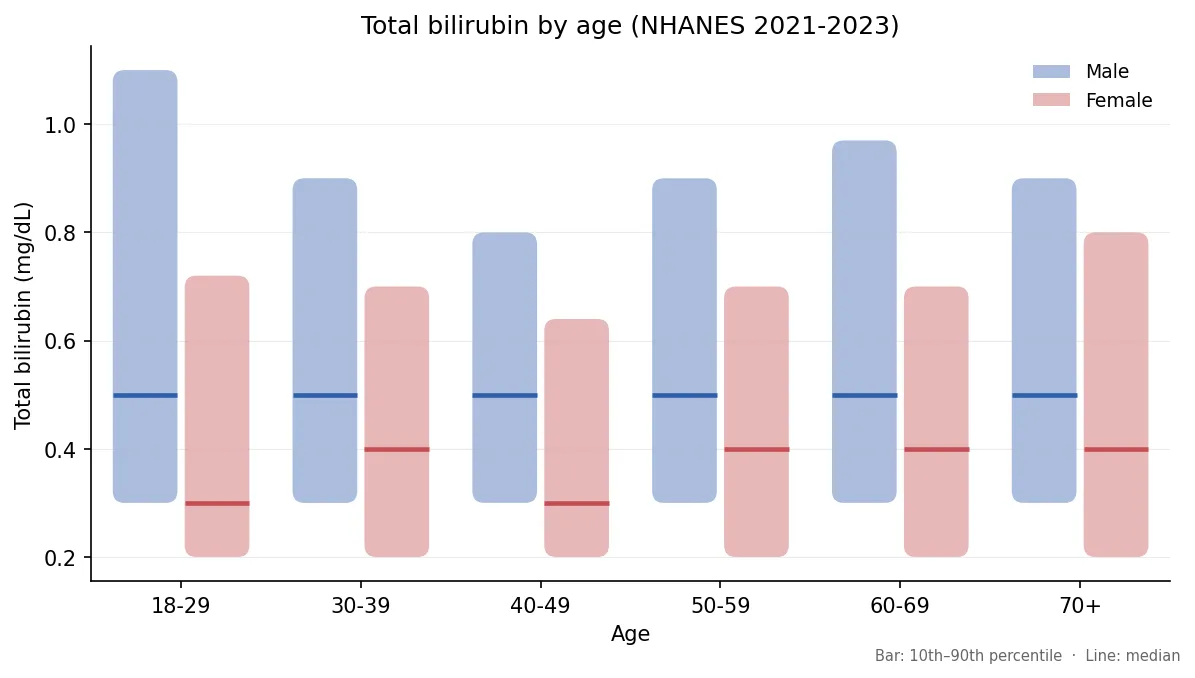
Median total bilirubin by age and sex, with the 10th to 90th percentile band. Source: NHANES 2021-2023 (weighted estimates).

A normal Bilirubin is 0.1 – 1.2 mg/dL. Lower is better.
Mildly elevated bilirubin is most commonly caused by Gilbert's syndrome, a harmless genetic variation present in about 5-10% of people. It typically causes no symptoms beyond occasional yellowing of the eyes during stress, fasting, or illness.
More significant elevations can indicate liver disease (hepatitis, cirrhosis), bile duct obstruction (gallstones, tumors), or hemolytic anemia (excessive red blood cell breakdown). Several medications can raise bilirubin, including certain antibiotics (like rifampin), HIV medications (atazanavir), and high-dose acetaminophen.
There are no specific lifestyle changes that lower bilirubin in healthy people. If bilirubin is elevated due to liver disease, reducing alcohol, maintaining a healthy weight, and avoiding hepatotoxic medications are the most important steps. Staying well-hydrated and avoiding prolonged fasting can help minimize spikes in people with Gilbert's syndrome.
Bilirubin is most highly correlated with Albumin and Creatinine. Here are the top biomarkers correlated with Bilirubin, based on 500,000 tests done by Empirical Health.
The percentage shows how strongly two biomarkers move together. A higher number means the relationship is stronger. Green = rises and falls together. Orange = one rises as the other falls.
Bilirubin is drawn at 2,200+ Quest and BioReference patient service centers across the US, so there's usually one within a short drive. Browse the full directory to find the one closest to you.
Test your Total Bilirubin and 100+ other biomarkers in a single blood draw.