Normal range: 125 – 200 mg/dL (lower is better)
Total cholesterol is the sum of all cholesterol fractions in your blood: HDL, LDL, and VLDL. While it is the most commonly screened lipid marker, it is also the least informative on its own. A high total can reflect either healthy high HDL or harmful high LDL, and a "normal" total can hide a dangerous lipid profile underneath. That is why modern guidelines emphasize looking at LDL, HDL, and ApoB individually rather than relying on total cholesterol alone.
Total Cholesterol isn't sold on its own. It comes in a standard lipid panel, about $45. A fuller workup adds Vitamin D ($75), hs-CRP ($69), ApoB ($50), and ApoA1 ($50). You can test Total Cholesterol and 100 other biomarkers for $190 as part of an Empirical membership.
Empirical is FSA/HSA eligible, so you can pay with pre-tax dollars. Fast for 8-12 hours beforehand for the most accurate lipid and metabolic results, and expect results in days rather than weeks.
Total cholesterol combines your “good” HDL and “bad” LDL cholesterol into one number. It gives a broad picture of your heart disease risk. The 2026 AHA/ACC guidelines also recommend testing Lp(a) and, in some cases, ApoB to catch risk that cholesterol alone may miss.
In NHANES 2021-2023, the median total cholesterol was about 168 mg/dL for adults aged 18-29 and 174 mg/dL for adults aged 70 and older. The chart below shows the full distribution by age and sex.
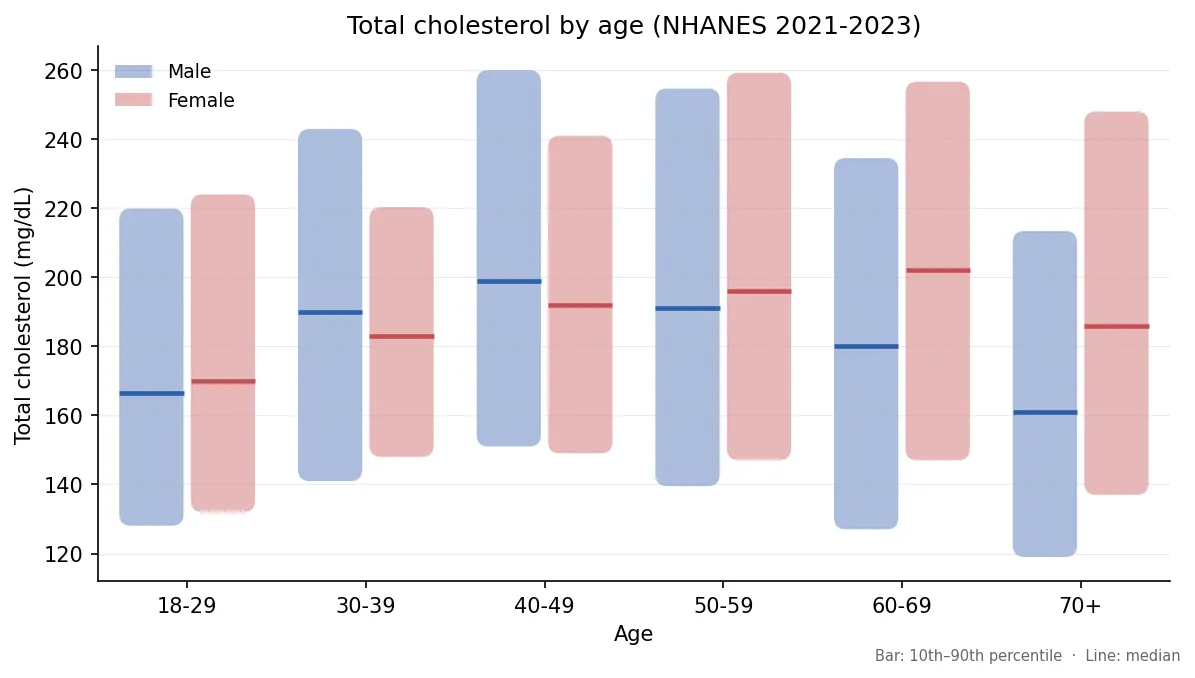
Median total cholesterol by age and sex, with the 10th to 90th percentile band. Source: NHANES 2021-2023 (weighted estimates).

A normal Total Cholesterol is 125 – 200 mg/dL. Lower is better.
High total cholesterol is most often driven by a diet rich in saturated fat, trans fats, and excess calories. Genetic conditions like familial hypercholesterolemia can cause very high levels from birth. Hypothyroidism, kidney disease, and liver disease can also raise total cholesterol.
Some medications (including corticosteroids, certain diuretics, and immunosuppressants) elevate cholesterol as a side effect. Pregnancy naturally raises total cholesterol as well, sometimes substantially.
Reducing saturated fat (red meat, butter, cheese, fried foods), increasing soluble fiber (oats, beans, fruits), exercising regularly, and maintaining a healthy weight are the most effective lifestyle changes. Statins are the first-line medication and can lower total cholesterol by 30-50%. Plant sterols and stanols (found in fortified foods) provide a modest additional benefit.
Total Cholesterol is most highly correlated with LDL Cholesterol and Non-HDL Cholesterol. Here are the top biomarkers correlated with Total Cholesterol, based on 500,000 tests done by Empirical Health.
The percentage shows how strongly two biomarkers move together. A higher number means the relationship is stronger. Green = rises and falls together. Orange = one rises as the other falls.
Total Cholesterol is drawn at 2,200+ Quest and BioReference patient service centers across the US, so there's usually one within a short drive. Browse the full directory to find the one closest to you.
Test your Total Cholesterol and 100+ other biomarkers in a single blood draw.