Normal range: Above 40 mg/dL (higher is better)
HDL ("good") cholesterol acts as your body's cholesterol recycling system. HDL particles scavenge excess cholesterol from artery walls and carry it back to the liver for disposal, a process called reverse cholesterol transport. Higher HDL is generally protective against heart disease. However, very high levels (above 100 mg/dL) may paradoxically increase risk in some people, and medications that artificially raise HDL have not consistently reduced heart attacks, suggesting HDL function matters more than the number alone.
A normal HDL is Above 40 mg/dL. Higher is better.
Low HDL is most commonly caused by physical inactivity, smoking, and a diet high in refined carbohydrates and trans fats. Obesity and metabolic syndrome are strong drivers. Type 2 diabetes and insulin resistance impair HDL production. Beta-blockers and anabolic steroids can lower HDL as a side effect.
Regular aerobic exercise is the single most effective way to raise HDL, typically increasing it by 5-10%. Quitting smoking, losing excess weight, and replacing refined carbs with healthy fats (olive oil, nuts, avocados, fatty fish) also help. Moderate alcohol intake raises HDL slightly, but the overall health risks generally outweigh this benefit. Genetic factors play a significant role, so some people have chronically low HDL despite a healthy lifestyle.
HDL (“good”) cholesterol helps remove other forms of cholesterol from your bloodstream.
In NHANES 2021-2023, the median HDL cholesterol was about 51 mg/dL for adults aged 18-29 and 54 mg/dL for adults aged 70 and older. The chart below shows the full distribution by age and sex.
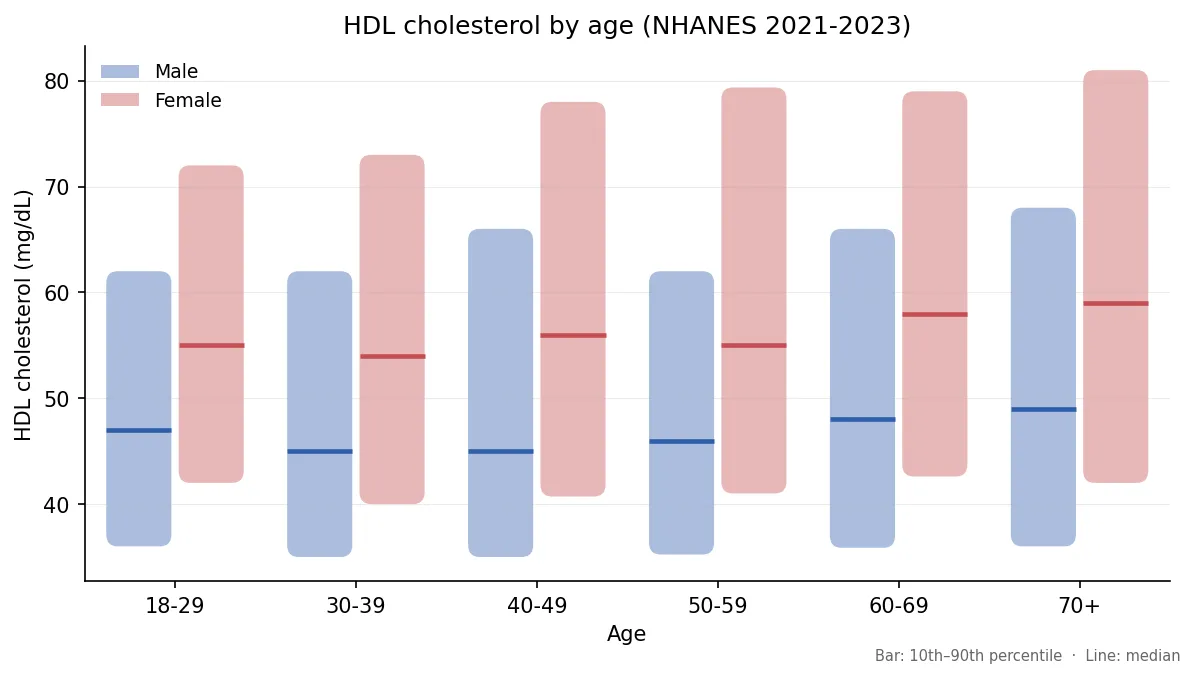
Median HDL cholesterol by age and sex, with the 10th to 90th percentile band. Source: NHANES 2021-2023 (weighted estimates).

HDL is most highly correlated with Apolipoprotein A1 and Total Cholesterol. Here are the top biomarkers correlated with HDL, based on 500,000 tests done by Empirical Health.
The percentage shows how strongly two biomarkers move together. A higher number means the relationship is stronger. Green = rises and falls together. Orange = one rises as the other falls.
HDL comes in a standard lipid panel (about $30–$60). Empirical's $190 panel adds LDL, Triglycerides, and 100+ other biomarkers.
You can measure your HDL for at 2,200+ testing locations across the US. Click below and enter your zip code to browse locations near you.
Test your HDL Cholesterol and 100+ other biomarkers in a single blood draw.