Normal range: 80 – 100 fL (higher is better)
MCV measures the average size of your red blood cells. It is the key test for classifying what type of anemia you have. Small cells (low MCV, called microcytic) suggest iron deficiency or thalassemia. Large cells (high MCV, called macrocytic) indicate vitamin B12 or folate deficiency, liver disease, or alcohol use. Normal-sized cells with a low count point to other causes like chronic disease or kidney problems.
MCV isn't sold on its own. It comes in a complete blood count (CBC), about $35. A fuller workup adds Vitamin D ($75), hs-CRP ($69), ApoB ($50), and ApoA1 ($50). You can test MCV and 100 other biomarkers for $190 as part of an Empirical membership.
Empirical is FSA/HSA eligible, so you can pay with pre-tax dollars. Fast for 8-12 hours beforehand for the most accurate lipid and metabolic results, and expect results in days rather than weeks.
MCV measures the average size of red blood cells. Changes can help diagnose different types of anemia.
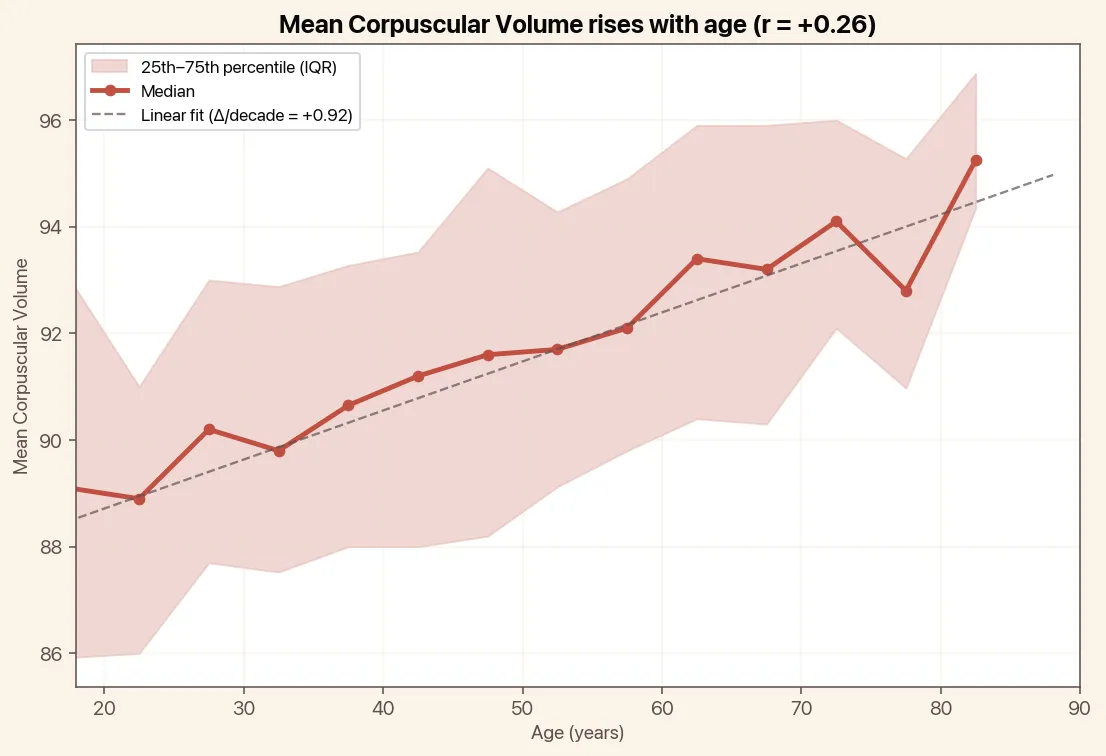
Mean Corpuscular Volume tends to rise with age (correlation with age, r = +0.26). The chart below shows the median by 5-year age bin and a linear trend line.

A normal MCV is 80 – 100 fL. Higher is better.
Low MCV (microcytic) is most often caused by iron deficiency or thalassemia trait. Chronic disease and lead poisoning can also shrink red cells. Eating more iron-rich foods or supplementing iron (if deficient) is the most direct way to normalize a low MCV from iron deficiency.
High MCV (macrocytic) is typically from B12 or folate deficiency, chronic alcohol use, or liver disease. Several medications can raise MCV, including methotrexate, hydroxyurea, some anticonvulsants, and certain HIV medications. Hypothyroidism is a less common cause.
If your MCV is off, the fix depends on the underlying cause. Iron supplementation for low MCV from iron deficiency. B12 or folate supplementation for high MCV from vitamin deficiency. Reducing alcohol intake if that is the driver. Your doctor will use MCV alongside other CBC values to determine the best approach.
MCV is most highly correlated with Mean Corpuscular Hemoglobin and HDL Cholesterol. Here are the top biomarkers correlated with MCV, based on 500,000 tests done by Empirical Health.
The percentage shows how strongly two biomarkers move together. A higher number means the relationship is stronger. Green = rises and falls together. Orange = one rises as the other falls.
MCV is drawn at 2,200+ Quest and BioReference patient service centers across the US, so there's usually one within a short drive. Browse the full directory to find the one closest to you.
Test your Mean Corpuscular Volume and 100+ other biomarkers in a single blood draw.