Normal range: 60 – 120 mL/min/1.73m² (higher is better)
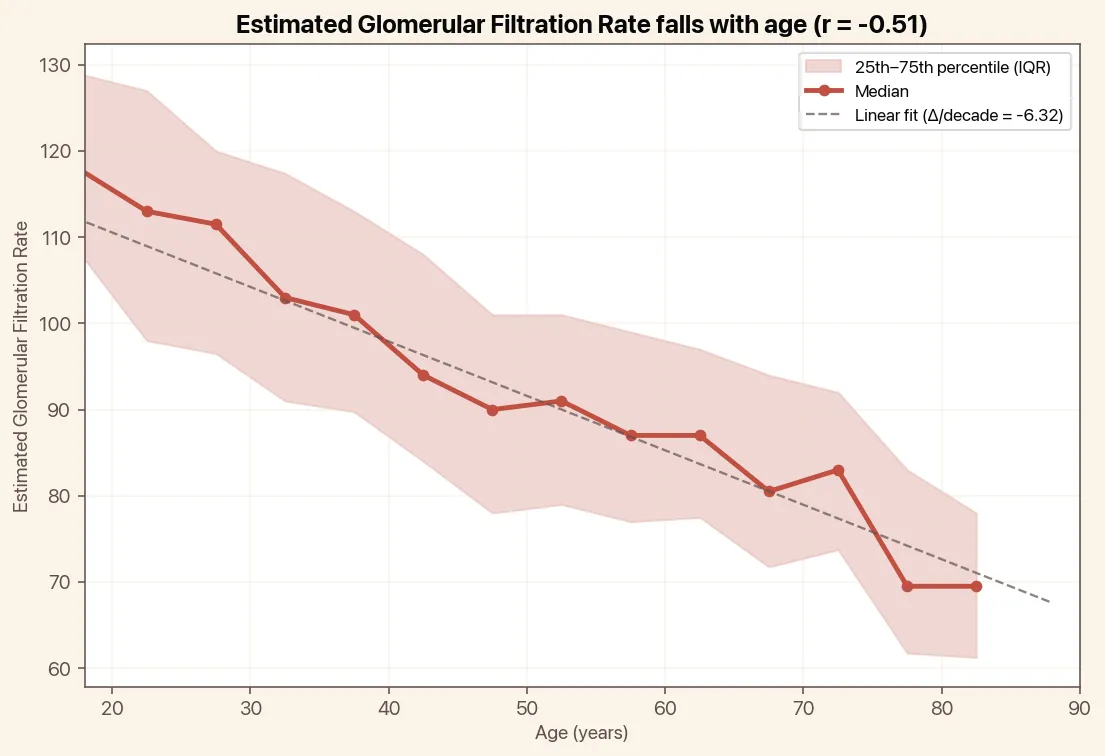
eGFR estimates how much blood your kidneys filter per minute. It is the single best measure of overall kidney function and is calculated from your creatinine level, age, and sex. Values above 60 are generally normal. Below 60 may indicate chronic kidney disease. eGFR declines naturally with age (about 1 point per year after 30), so a mild decline in older adults is expected.
A normal eGFR is 60 – 120 mL/min/1.73m². Higher is better.
Low eGFR reflects reduced kidney filtering capacity. The most common causes are diabetes (diabetic nephropathy) and high blood pressure, which together account for the majority of chronic kidney disease worldwide.
Acute kidney injury from dehydration, medications (NSAIDs, contrast dye), or obstruction can temporarily lower eGFR. People with high muscle mass may have a slightly lower eGFR due to higher creatinine production, not actual kidney disease.
Protecting your kidneys is largely about managing the big risk factors. Keeping blood pressure under control, managing blood sugar if you have diabetes, staying hydrated, and avoiding excessive NSAID use are the most important steps. ACE inhibitors and ARBs (common blood pressure medications) can temporarily lower eGFR when first started but are actually protective for kidney health long-term. Regular monitoring helps catch decline early, when interventions are most effective.
eGFR is most highly correlated with BUN and Vitamin D. Here are the top biomarkers correlated with eGFR, based on 500,000 tests done by Empirical Health.
The percentage shows how strongly two biomarkers move together. A higher number means the relationship is stronger. Green = rises and falls together. Orange = one rises as the other falls.
You can test your eGFR for $190 as part of Empirical's comprehensive health panel, which includes 100 biomarkers.
You can measure your eGFR for at 2,200+ testing locations across the US. Click below and enter your zip code to browse locations near you.
Test your Estimated GFR and 100+ other biomarkers in a single blood draw.