Normal range: 135 – 145 mmol/L (higher is better)
Sodium is the primary electrolyte in your blood, responsible for regulating fluid balance, nerve impulses, and muscle contractions. Your body keeps sodium in a very tight range. When levels go too high or too low, it can cause neurological symptoms ranging from confusion and headaches to seizures. Most people's sodium stays in range, but medications and certain conditions can push it off.
Sodium isn't sold on its own. It comes in a comprehensive metabolic panel, about $40. A fuller workup adds Vitamin D ($75), hs-CRP ($69), ApoB ($50), and ApoA1 ($50). You can test Sodium and 100 other biomarkers for $190 as part of an Empirical membership.
Empirical is FSA/HSA eligible, so you can pay with pre-tax dollars. Fast for 8-12 hours beforehand for the most accurate lipid and metabolic results, and expect results in days rather than weeks.
Sodium is essential for fluid balance, nerve transmission, and muscle contraction.
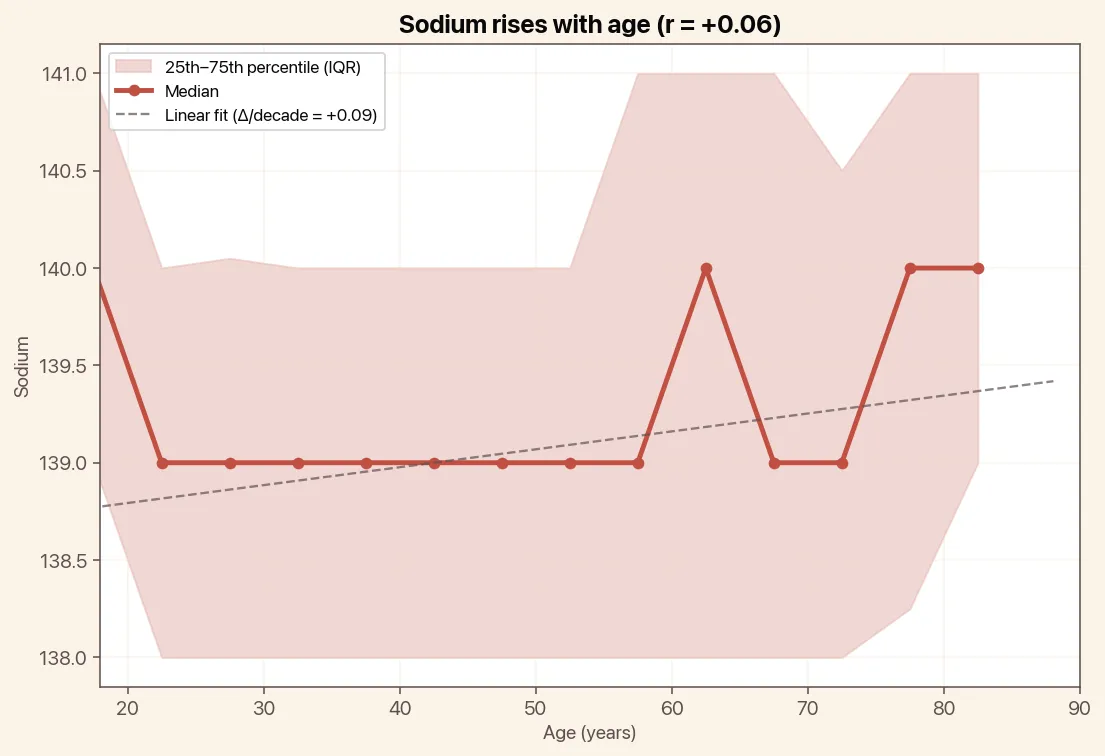
Sodium tends to rise with age (correlation with age, r = +0.06). The chart below shows the median by 5-year age bin and a linear trend line.

A normal Sodium is 135 – 145 mmol/L. Higher is better.
Low sodium (hyponatremia) is most often caused by excess water intake diluting the blood, diuretic medications (especially thiazide diuretics), heart failure, liver cirrhosis, or SIADH (a hormone disorder that causes the body to retain too much water). Endurance athletes who overhydrate during long events are at risk. SSRIs (antidepressants) are an underappreciated cause of low sodium, especially in older adults.
High sodium (hypernatremia) is usually caused by dehydration from inadequate water intake, excessive sweating, diarrhea, or diabetes insipidus. It is more common in elderly people with reduced thirst sensation.
For most people, sodium stays in range without much effort. Drinking water when thirsty (but not excessively) and being aware of medications that affect sodium are the key considerations. If you take diuretics, your doctor will likely monitor sodium regularly.
Sodium is most highly correlated with Chloride and Carbon Dioxide. Here are the top biomarkers correlated with Sodium, based on 500,000 tests done by Empirical Health.
The percentage shows how strongly two biomarkers move together. A higher number means the relationship is stronger. Green = rises and falls together. Orange = one rises as the other falls.
Sodium is drawn at 2,200+ Quest and BioReference patient service centers across the US, so there's usually one within a short drive. Browse the full directory to find the one closest to you.
Test your Sodium and 100+ other biomarkers in a single blood draw.