Test your CO₂ and 100+ other biomarkers for $190

Carbon Dioxide (Bicarbonate)

Normal range: 20 – 29 mmol/L (higher is better)

Despite the name, this test actually measures bicarbonate, your blood's main acid-base buffer. Your body constantly produces acid from metabolism, and bicarbonate neutralizes it. When this system is out of balance, it shows up as abnormal CO2 on your blood panel. It is a key piece of the metabolic puzzle and is always interpreted alongside other electrolytes.

Test your CO₂

What can cause low CO₂?

A normal CO₂ is 20 – 29 mmol/L. Higher is better.

Low CO2 (low bicarbonate) results from metabolic acidosis: diabetic ketoacidosis, lactic acidosis, kidney failure, or chronic diarrhea that depletes bicarbonate. Hyperventilation from anxiety can also temporarily lower it.

High CO2 is seen in metabolic alkalosis from prolonged vomiting, diuretic use, or excess antacid intake. Chronic lung disease (COPD, emphysema) impairs CO2 clearance over time.

Several common medications affect CO2 levels. Thiazide and loop diuretics can raise it by causing the kidneys to retain bicarbonate. Metformin and aspirin (in high doses) can lower it. Topiramate (used for seizures and migraines) is a well-known cause of low bicarbonate. Staying hydrated and managing chronic conditions like diabetes and kidney disease are the most important lifestyle factors.

Despite the name, this test actually measures bicarbonate, your blood’s main acid-base buffer. Your body constantly produces acid from metabolism, and bicarbonate neutralizes it. Low CO2 can indicate metabolic acidosis. High CO2 is seen in metabolic alkalosis or chronic lung disease. It is always interpreted alongside other electrolytes.

How does Carbon Dioxide change with age?

Carbon Dioxide tends to rise with age (correlation with age, r = +0.11). The chart below shows the median by 5-year age bin and a linear trend line.
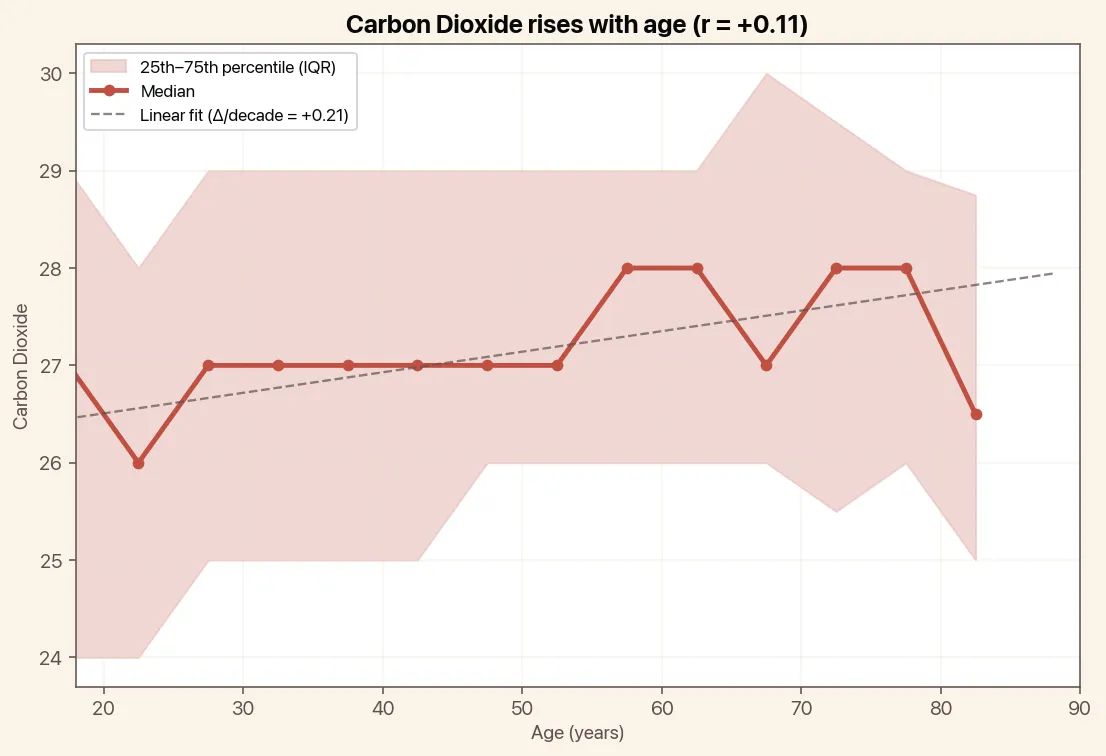

Carbon Dioxide rises with age, chart with median and linear trend

Biomarkers related to CO₂

CO₂ is most highly correlated with Anion Gap and Chloride. Here are the top biomarkers correlated with CO₂, based on 500,000 tests done by Empirical Health.

The percentage shows how strongly two biomarkers move together. A higher number means the relationship is stronger. Green = rises and falls together. Orange = one rises as the other falls.

Frequently asked questions about CO₂

CO₂ test cost

CO₂ comes in a comprehensive metabolic panel (about $29–$55), or $190 with Calcium, Albumin, and 100+ other biomarkers at Empirical Health.

Get tested for $190

Where to test CO₂

You can measure your CO₂ for at 2,200+ testing locations across the US. Click below and enter your zip code to browse locations near you.

Find a testing location near you

Know your CO₂. Know your health.

Test your Carbon Dioxide (Bicarbonate) and 100+ other biomarkers in a single blood draw.

Image of a man on cellphone
Start testing