Normal range: 0 – 200 cells/µL (higher is better)
Basophils are the rarest type of white blood cell, typically making up less than 1% of your total white cells. They release histamine and other chemicals during allergic reactions and play a role in inflammation. Because the count is so low at baseline, even small changes can look significant on a lab report. Elevated basophils are uncommon and worth investigating if persistent.
A normal Abs. Basophils is 0 – 200 cells/µL. Higher is better.
Elevated basophils (basophilia) are rare and can indicate allergic reactions, chronic myeloid leukemia, other myeloproliferative disorders, or hypothyroidism. Ulcerative colitis and chronic infection are less common causes.
Low basophils are difficult to detect because the baseline count is already very low. Acute stress, hyperthyroidism, and corticosteroid use can reduce them further.
There are no specific lifestyle changes that target basophil count. Managing underlying allergies or thyroid conditions is the most relevant intervention. If basophils are persistently elevated without an obvious cause, your doctor may evaluate for a myeloproliferative disorder.
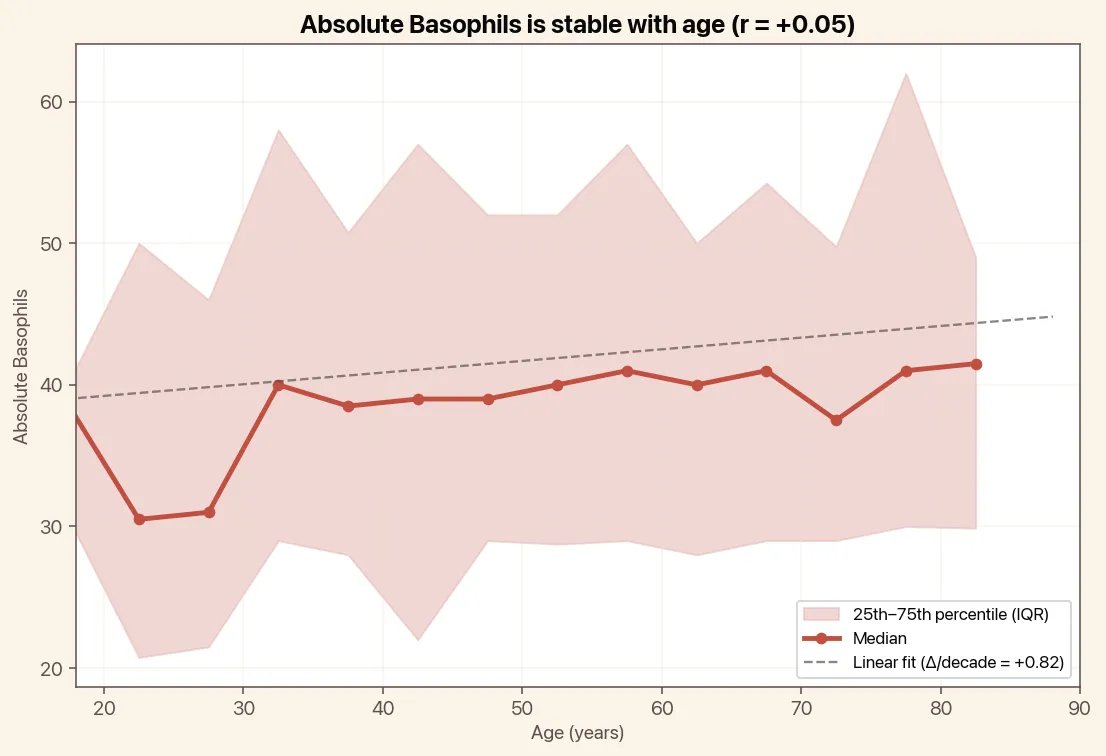
Abs. Basophils is most highly correlated with Absolute Lymphocytes and White Blood Cell Count. Here are the top biomarkers correlated with Abs. Basophils, based on 500,000 tests done by Empirical Health.
The percentage shows how strongly two biomarkers move together. A higher number means the relationship is stronger. Green = rises and falls together. Orange = one rises as the other falls.
You can test your Abs. Basophils for $190 as part of Empirical's comprehensive health panel, which includes 100 biomarkers.
You can measure your Abs. Basophils for at 2,200+ testing locations across the US. Click below and enter your zip code to browse locations near you.
Test your Absolute Basophils and 100+ other biomarkers in a single blood draw.