Normal range: 15 – 500 cells/µL (higher is better)
Eosinophils are white blood cells specialized in fighting parasites and mediating allergic reactions. In developed countries, the most common reason for elevated eosinophils is allergies or asthma rather than parasites. Very high levels (above 1,500 cells/uL) can sometimes indicate a blood disorder or a condition called hypereosinophilic syndrome, which can damage organs if untreated.
Abs. Eosinophils isn't sold on its own. It comes in a complete blood count (CBC), about $35. A fuller workup adds Vitamin D ($75), hs-CRP ($69), ApoB ($50), and ApoA1 ($50). You can test Abs. Eosinophils and 100 other biomarkers for $190 as part of an Empirical membership.
Empirical is FSA/HSA eligible, so you can pay with pre-tax dollars. Fast for 8-12 hours beforehand for the most accurate lipid and metabolic results, and expect results in days rather than weeks.
Eosinophils are white blood cells that combat parasites and participate in allergic responses.
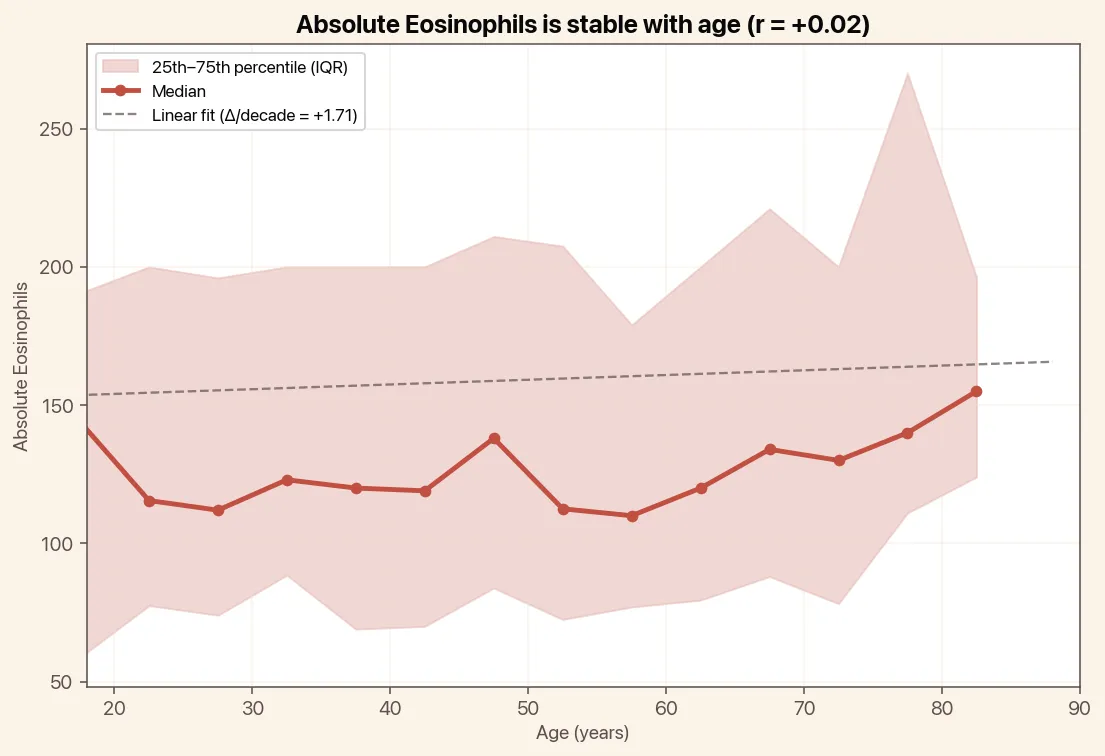
Absolute Eosinophils stays relatively flat across adult ages (correlation with age, r = +0.02). Most of the spread in the chart below comes from differences between people rather than from age.

A normal Abs. Eosinophils is 15 – 500 cells/µL. Higher is better.
Allergic conditions (asthma, hay fever, eczema, food allergies) are the most common cause of elevated eosinophils in developed countries. Parasitic infections are the leading cause worldwide. Drug reactions (especially to antibiotics and anticonvulsants) and autoimmune conditions like eosinophilic esophagitis also raise levels.
Low eosinophils are generally not clinically significant. Acute stress and corticosteroid use can temporarily suppress them. Corticosteroids are also used therapeutically to lower dangerously high eosinophils.
Managing underlying allergies and asthma with appropriate medications (antihistamines, inhaled corticosteroids, biologics like dupilumab) is the most effective way to lower elevated eosinophils. Identifying and avoiding allergic triggers can help as well. If you have traveled internationally and have elevated eosinophils, your doctor may screen for parasitic infections.
Abs. Eosinophils is most highly correlated with White Blood Cell Count and Absolute Monocytes. Here are the top biomarkers correlated with Abs. Eosinophils, based on 500,000 tests done by Empirical Health.
The percentage shows how strongly two biomarkers move together. A higher number means the relationship is stronger. Green = rises and falls together. Orange = one rises as the other falls.
Abs. Eosinophils is drawn at 2,200+ Quest and BioReference patient service centers across the US, so there's usually one within a short drive. Browse the full directory to find the one closest to you.
Test your Absolute Eosinophils and 100+ other biomarkers in a single blood draw.