Normal range: 200 – 950 cells/µL (higher is better)
Monocytes are large white blood cells that migrate into tissues and transform into macrophages, the "cleanup crew" of your immune system. They clear dead cells, fight chronic infections, and play a key role in both inflammation and tissue repair. Elevated monocytes often reflect a chronic process rather than an acute one, making them useful for spotting lingering infections or inflammatory conditions.
Abs. Monocytes isn't sold on its own. It comes in a complete blood count (CBC), about $35. A fuller workup adds Vitamin D ($75), hs-CRP ($69), ApoB ($50), and ApoA1 ($50). You can test Abs. Monocytes and 100 other biomarkers for $190 as part of an Empirical membership.
Empirical is FSA/HSA eligible, so you can pay with pre-tax dollars. Fast for 8-12 hours beforehand for the most accurate lipid and metabolic results, and expect results in days rather than weeks.
Monocytes are white blood cells that help fight chronic infections and remove dead or damaged tissues.
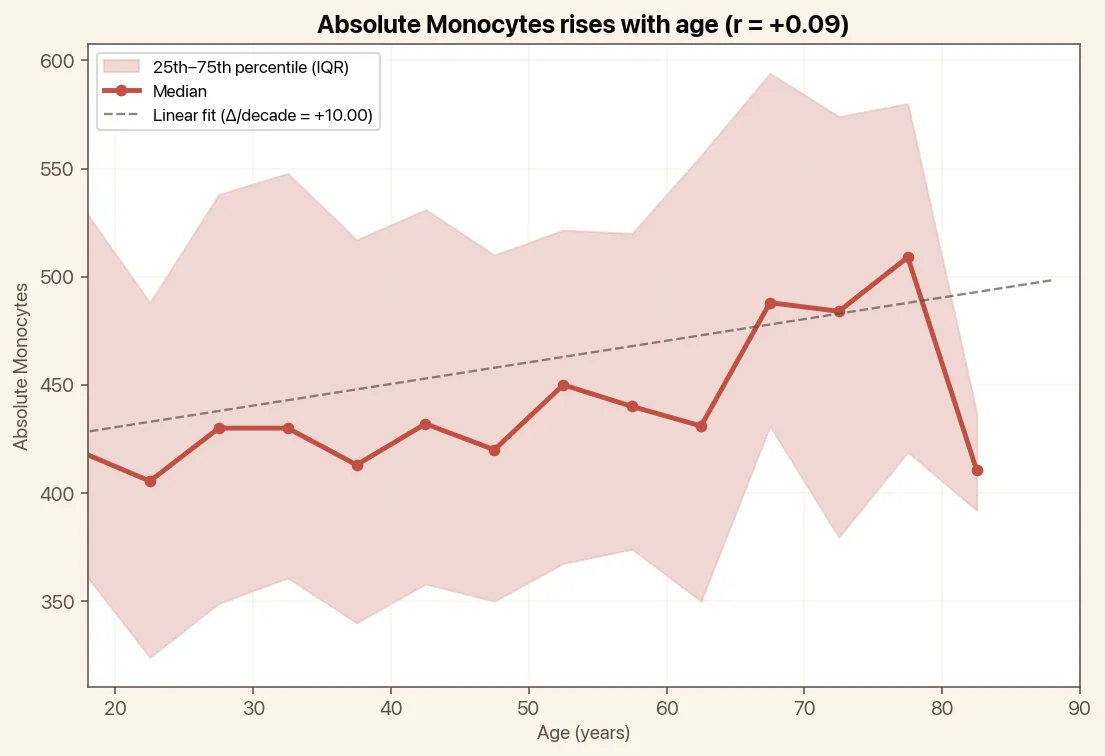
Absolute Monocytes tends to rise with age (correlation with age, r = +0.09). The chart below shows the median by 5-year age bin and a linear trend line.

A normal Abs. Monocytes is 200 – 950 cells/µL. Higher is better.
High monocytes (monocytosis) are commonly seen during recovery from acute infections, in chronic inflammatory conditions like inflammatory bowel disease, and in autoimmune disorders. Chronic infections such as tuberculosis and endocarditis are classic causes. Obesity is associated with mild monocyte elevation due to chronic low-grade inflammation.
Low monocytes are less clinically significant but can occur with bone marrow suppression, overwhelming sepsis, or corticosteroid use.
Reducing chronic inflammation through regular exercise, maintaining a healthy weight, and eating an anti-inflammatory diet (rich in fruits, vegetables, omega-3 fatty acids) may help normalize mildly elevated monocytes. Treating the underlying infection or inflammatory condition is the most direct approach.
Abs. Monocytes is most highly correlated with Platelet Count and Absolute Neutrophils. Here are the top biomarkers correlated with Abs. Monocytes, based on 500,000 tests done by Empirical Health.
The percentage shows how strongly two biomarkers move together. A higher number means the relationship is stronger. Green = rises and falls together. Orange = one rises as the other falls.
Abs. Monocytes is drawn at 2,200+ Quest and BioReference patient service centers across the US, so there's usually one within a short drive. Browse the full directory to find the one closest to you.
Test your Absolute Monocytes and 100+ other biomarkers in a single blood draw.