Normal range: Above 1500 cells/µL (higher is better)
Neutrophils are the most abundant type of white blood cell and your immune system's first responders. When bacteria invade, neutrophils rush to the site within hours. The absolute neutrophil count (ANC) tells you how many are circulating. Elevated ANC usually means your body is fighting an infection or dealing with inflammation. Very low ANC (neutropenia) leaves you vulnerable to bacterial infections.
Abs. Neutrophils isn't sold on its own. It comes in a complete blood count (CBC), about $35. A fuller workup adds Vitamin D ($75), hs-CRP ($69), ApoB ($50), and ApoA1 ($50). You can test Abs. Neutrophils and 100 other biomarkers for $190 as part of an Empirical membership.
Empirical is FSA/HSA eligible, so you can pay with pre-tax dollars. Fast for 8-12 hours beforehand for the most accurate lipid and metabolic results, and expect results in days rather than weeks.
Neutrophils are white blood cells that fight bacterial infections. They are the most abundant type of white blood cell.
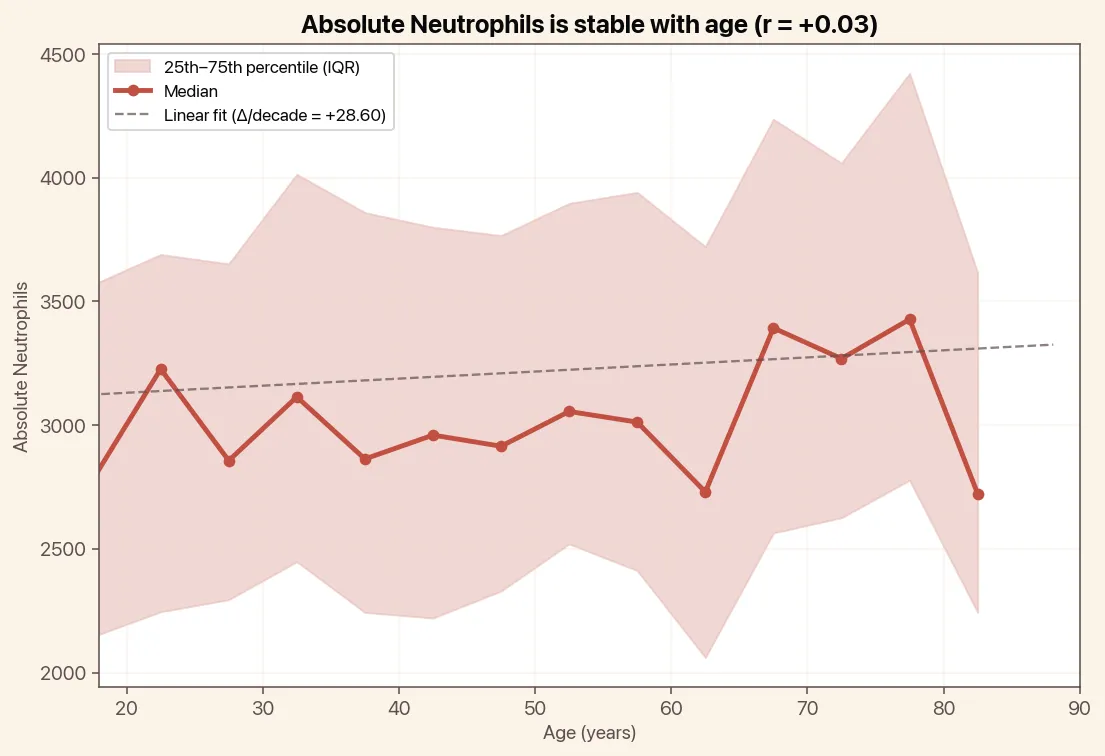
Absolute Neutrophils stays relatively flat across adult ages (correlation with age, r = +0.03). Most of the spread in the chart below comes from differences between people rather than from age.

A normal Abs. Neutrophils is Above 1500 cells/µL. Higher is better.
Low neutrophils (neutropenia) can result from viral infections, autoimmune conditions, bone marrow suppression, chemotherapy, or certain medications like clozapine, carbamazepine, and methimazole. Benign ethnic neutropenia is common in people of African and Middle Eastern descent and is not harmful.
High neutrophils are usually a normal response to bacterial infection, physical stress, surgery, or corticosteroid use. Smoking chronically raises the neutrophil count. Intense exercise can temporarily spike neutrophils for several hours. Persistently elevated counts without an obvious cause should be evaluated further.
Quitting smoking is the most impactful lifestyle change for people with chronically elevated neutrophils. Good hygiene and infection prevention are important for people with neutropenia. There are no specific dietary interventions that directly target neutrophil count.
Abs. Neutrophils is most highly correlated with Absolute Monocytes and Platelet Count. Here are the top biomarkers correlated with Abs. Neutrophils, based on 500,000 tests done by Empirical Health.
The percentage shows how strongly two biomarkers move together. A higher number means the relationship is stronger. Green = rises and falls together. Orange = one rises as the other falls.
Abs. Neutrophils is drawn at 2,200+ Quest and BioReference patient service centers across the US, so there's usually one within a short drive. Browse the full directory to find the one closest to you.
Test your Absolute Neutrophils and 100+ other biomarkers in a single blood draw.