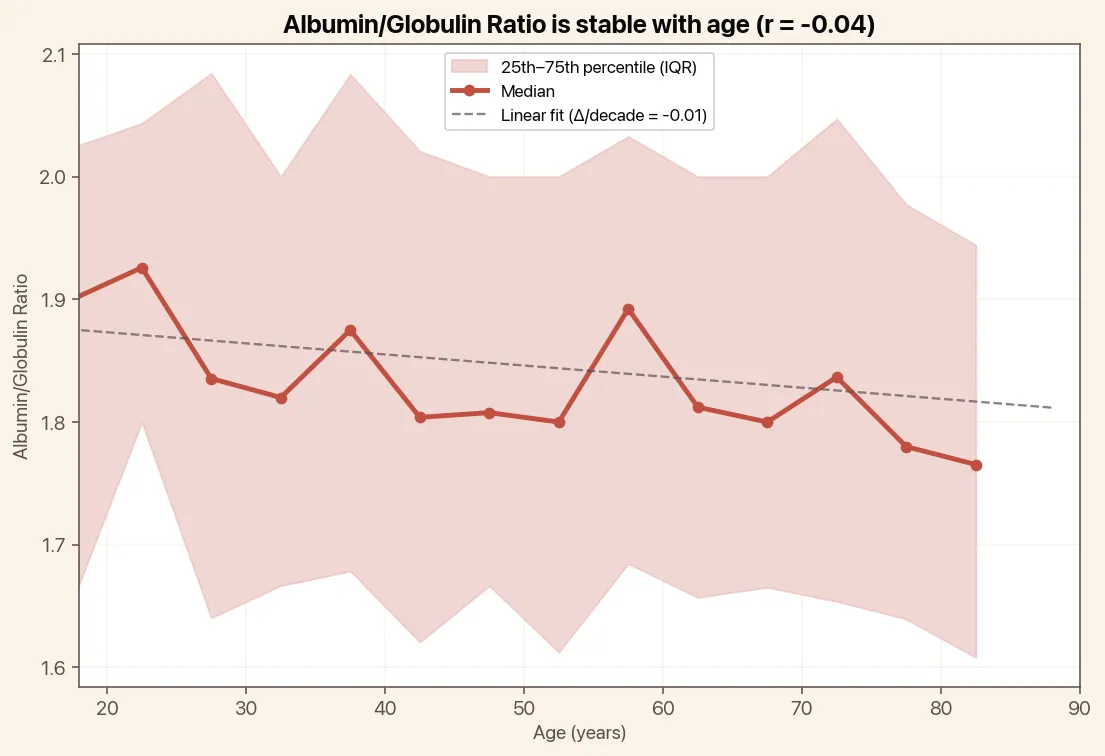
Albumin/Globulin Ratio

Normal range: 1.1 – 2.5 (higher is better)

The A/G ratio compares your liver-produced albumin to your immune globulins. It captures the balance between nutritional health and immune activation in a single number. A ratio below 1.0 means you have more globulins than albumin, which can signal liver disease, chronic infection, or a plasma cell disorder. A high ratio is less commonly a concern.

Test your A/G Ratio

What can cause low A/G Ratio?

A normal A/G Ratio is 1.1 – 2.5. Higher is better.

A low A/G ratio results from low albumin (liver disease, kidney disease, malnutrition), high globulin (chronic infections, autoimmune conditions, myeloma), or both. A very low ratio warrants investigation for multiple myeloma.

Because the A/G ratio is derived from albumin and globulin, the same lifestyle factors and medications that affect those individual markers affect this ratio. Improving nutrition, reducing chronic inflammation, and moderating alcohol intake can help normalize it from the albumin side. Treating underlying infections or autoimmune conditions addresses the globulin side.

Biomarkers related to A/G Ratio

A/G Ratio is most highly correlated with High-sensitivity C-reactive Protein and Globulin. Here are the top biomarkers correlated with A/G Ratio, based on 500,000 tests done by Empirical Health.

The percentage shows how strongly two biomarkers move together. A higher number means the relationship is stronger. Green = rises and falls together. Orange = one rises as the other falls.

A/G Ratio test cost

You can test your A/G Ratio for $190 as part of Empirical's comprehensive health panel, which includes 100 biomarkers.

Get tested for $190

Where to test A/G Ratio

You can measure your A/G Ratio for at 2,200+ testing locations across the US. Click below and enter your zip code to browse locations near you.

Find a testing location near you

Know your A/G Ratio. Know your health.

Test your Albumin/Globulin Ratio and 100+ other biomarkers in a single blood draw.

Image of a man on cellphone
Start testing