Normal range: 10 – 20 (lower is better)
The BUN/creatinine ratio helps your doctor figure out why kidney markers might be off. A high ratio with elevated BUN suggests the kidneys themselves are healthy but not getting enough blood flow (often from dehydration). A normal ratio alongside elevated creatinine points to actual kidney disease. It is a diagnostic clue, not a standalone test.
BUN/Cr Ratio is calculated rather than ordered on its own, so it comes with a comprehensive metabolic panel (about $40 at Quest or LabCorp). A fuller workup adds Vitamin D ($75), hs-CRP ($69), ApoB ($50), and ApoA1 ($50). You can test BUN/Cr Ratio and 100 other biomarkers for $190 as part of an Empirical membership.
Empirical is FSA/HSA eligible, so you can pay with pre-tax dollars. Fast for 8-12 hours beforehand for the most accurate lipid and metabolic results, and expect results in days rather than weeks.
The BUN/creatinine ratio helps your doctor figure out why kidney markers might be off. A high ratio with elevated BUN suggests the kidneys are healthy but not getting enough blood flow (often from dehydration). A normal ratio alongside elevated creatinine points to actual kidney disease. It is a diagnostic clue, not a standalone test.
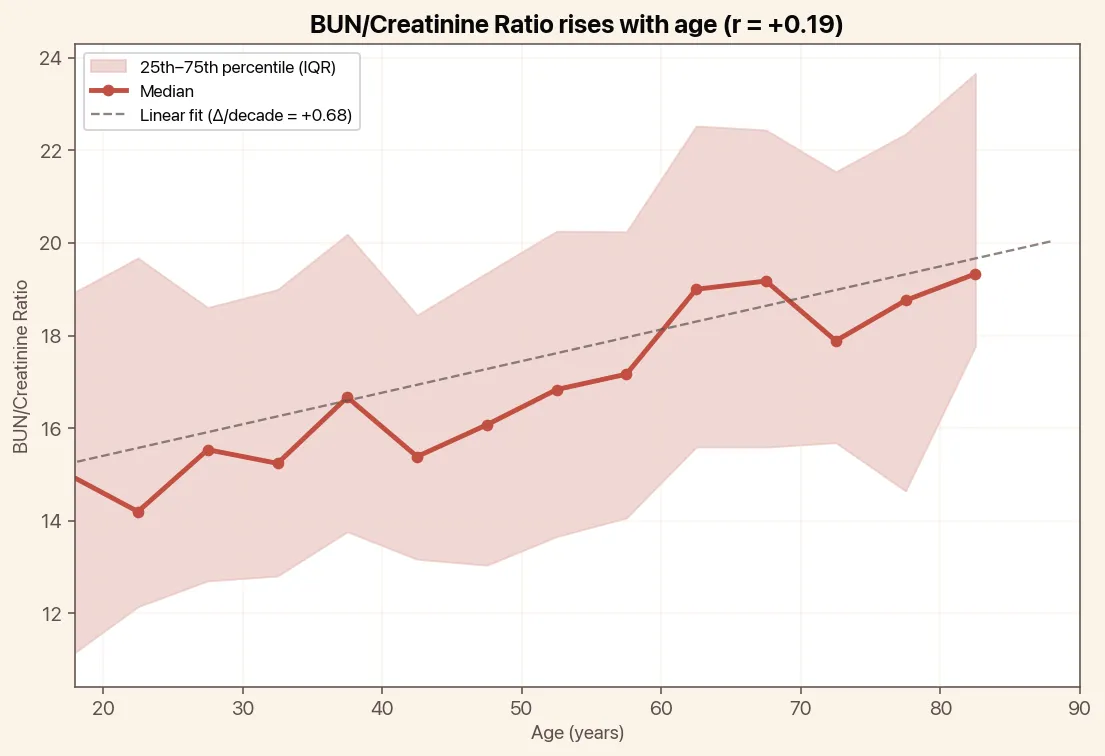
BUN/Creatinine Ratio tends to rise with age (correlation with age, r = +0.19). The chart below shows the median by 5-year age bin and a linear trend line.

A normal BUN/Cr Ratio is 10 – 20. Lower is better.
A high BUN/creatinine ratio usually indicates dehydration or reduced blood flow to the kidneys (called prerenal azotemia), meaning the kidneys are structurally healthy but underperfused. GI bleeding and high-protein diets also raise BUN selectively, pushing the ratio up.
A low ratio may indicate liver disease (reduced urea production), malnutrition, or rhabdomyolysis (muscle breakdown floods the blood with creatinine). Because this is a derived ratio, the same lifestyle factors and medications that affect BUN and creatinine individually drive changes here. Staying hydrated is the single most impactful thing you can do.
BUN/Cr Ratio is most highly correlated with BUN and HDL Cholesterol. Here are the top biomarkers correlated with BUN/Cr Ratio, based on 500,000 tests done by Empirical Health.
The percentage shows how strongly two biomarkers move together. A higher number means the relationship is stronger. Green = rises and falls together. Orange = one rises as the other falls.
BUN/Cr Ratio is drawn at 2,200+ Quest and BioReference patient service centers across the US, so there's usually one within a short drive. Browse the full directory to find the one closest to you.
Test your BUN/Creatinine Ratio and 100+ other biomarkers in a single blood draw.