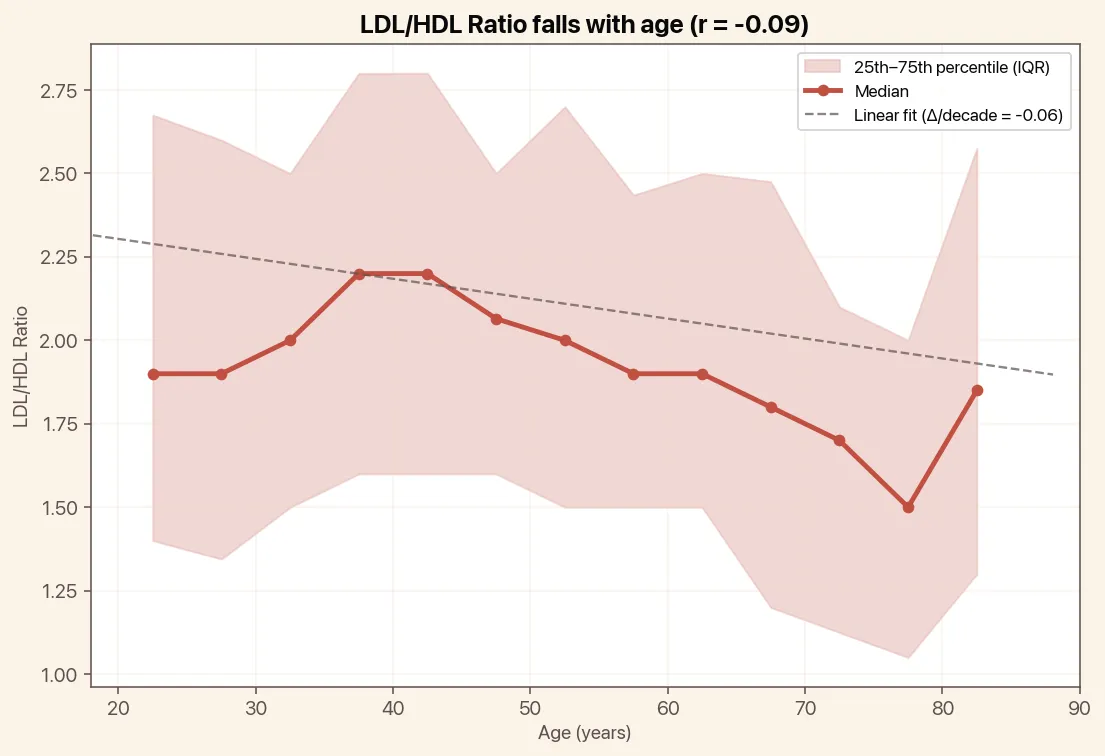
Normal range: 0 – 3 (lower is better)
The LDL/HDL ratio directly compares your harmful LDL particles to your protective HDL particles. Lower ratios indicate a more favorable lipid balance and lower cardiovascular risk. A ratio below 3.0 is generally considered good, while above 3.0 warrants attention. This ratio is particularly useful because two people with the same LDL can have very different risk profiles depending on their HDL.
A normal LDL/HDL is 0 – 3. Lower is better.
A high LDL/HDL ratio is driven by the same factors that raise LDL (saturated fat, genetics, hypothyroidism) or lower HDL (inactivity, smoking, obesity). Addressing both sides simultaneously, through diet, exercise, and sometimes medication, is the most effective strategy.
Regular exercise is uniquely powerful here because it both lowers LDL and raises HDL, improving the ratio from both directions. Dietary changes (less saturated fat, more fiber and healthy fats) primarily address the LDL side. Statins lower LDL and provide a modest HDL increase.
LDL/HDL is most highly correlated with Apolipoprotein B and Non-HDL Cholesterol. Here are the top biomarkers correlated with LDL/HDL, based on 500,000 tests done by Empirical Health.
The percentage shows how strongly two biomarkers move together. A higher number means the relationship is stronger. Green = rises and falls together. Orange = one rises as the other falls.
You can test your LDL/HDL for $190 as part of Empirical's comprehensive health panel, which includes 100 biomarkers.
You can measure your LDL/HDL for at 2,200+ testing locations across the US. Click below and enter your zip code to browse locations near you.
Test your LDL/HDL Ratio and 100+ other biomarkers in a single blood draw.