Normal range: 2.7 – 17 ng/mL (higher is better)
Folate (vitamin B9) is needed for DNA synthesis, cell division, and amino acid metabolism. It is especially critical during pregnancy, where deficiency dramatically raises the risk of neural tube defects in the developing baby. Outside of pregnancy, low folate causes megaloblastic anemia (large, immature red blood cells) and often coexists with B12 deficiency. Most flour and grain products in the US are fortified with folic acid, which has significantly reduced deficiency rates.
On its own, Folate costs about $45 but is usually measured in a panel alongside Vitamin B12 ($45), Vitamin D ($75), hs-CRP ($69), and ApoB ($50). You can test Folate and 100 other biomarkers for $190 as part of an Empirical membership.
Empirical is FSA/HSA eligible, so you can pay with pre-tax dollars. Fast for 8-12 hours beforehand for the most accurate lipid and metabolic results, and expect results in days rather than weeks.
Folate (vitamin B9) is needed for DNA synthesis, cell division, and amino acid metabolism. It is especially critical during pregnancy, where deficiency raises the risk of neural tube defects. Outside of pregnancy, low folate causes megaloblastic anemia and often coexists with B12 deficiency. Leafy greens, legumes, and fortified grains are the main dietary sources.
Folate tends to rise with age (correlation with age, r = +0.05). The chart below shows the median by 5-year age bin and a linear trend line.
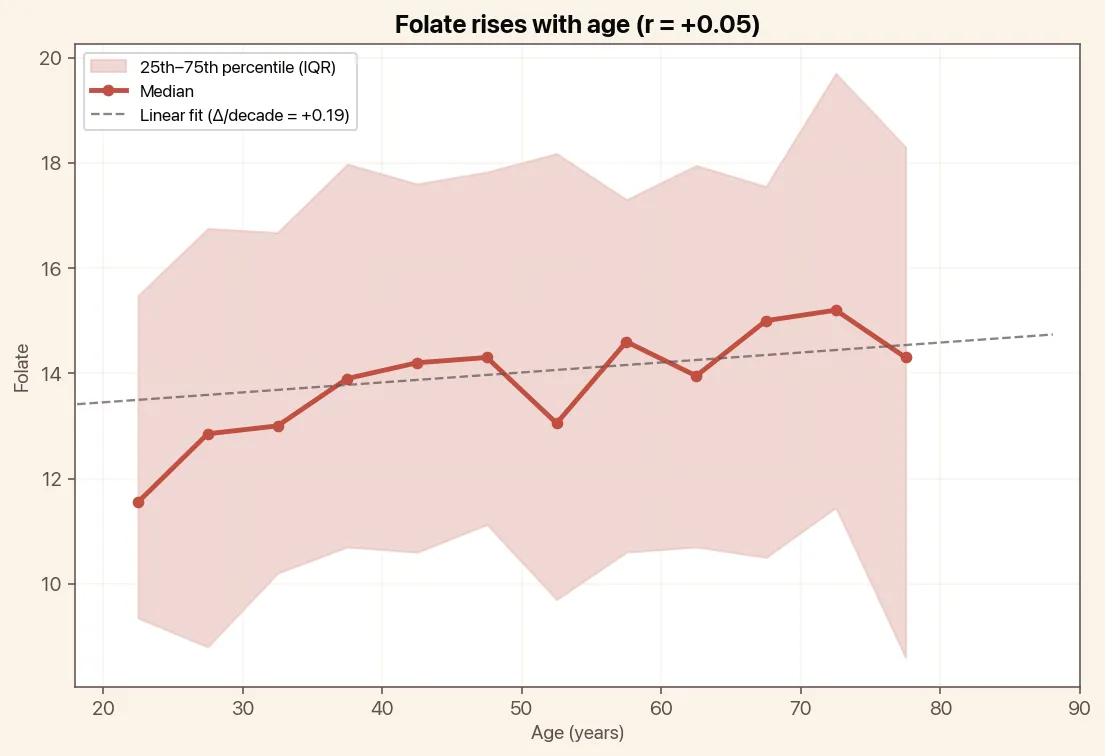

A normal Folate is 2.7 – 17 ng/mL. Higher is better.
Low folate is usually caused by inadequate dietary intake. Leafy greens, legumes, citrus fruits, and fortified grains are the main sources. Alcohol impairs folate absorption and increases its breakdown, making heavy drinkers particularly vulnerable.
Several medications deplete folate: methotrexate (used for cancer and autoimmune disease), some anticonvulsants (phenytoin, carbamazepine), sulfasalazine, and trimethoprim. Pregnancy dramatically increases folate requirements, which is why prenatal vitamins contain folic acid. Celiac disease and inflammatory bowel disease impair absorption.
Eating a diet rich in leafy greens and legumes is the best way to maintain folate. Women who are or may become pregnant should take at least 400 mcg of folic acid daily. If you take a medication that depletes folate, your doctor may recommend a supplement.
Folate is most highly correlated with Vitamin D and TSH. Here are the top biomarkers correlated with Folate, based on 500,000 tests done by Empirical Health.
The percentage shows how strongly two biomarkers move together. A higher number means the relationship is stronger. Green = rises and falls together. Orange = one rises as the other falls.
Folate is drawn at 2,200+ Quest and BioReference patient service centers across the US, so there's usually one within a short drive. Browse the full directory to find the one closest to you.
Test your Folate and 100+ other biomarkers in a single blood draw.